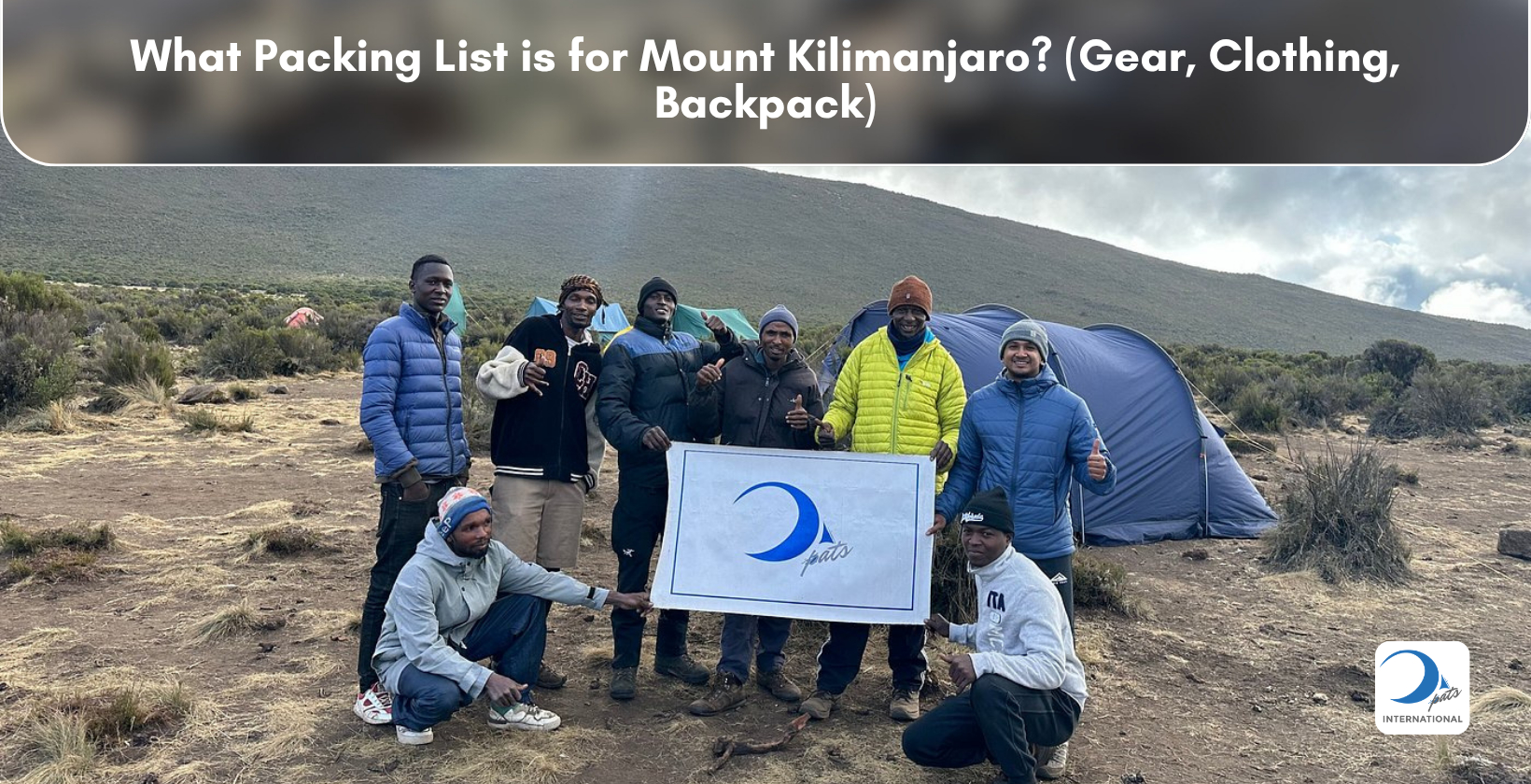
Climbing Mount Kilimanjaro requires a specific set of gear, clothing, accessories, and medical supplies. The clothing must account for the different ecological zones.
Build Your Personalized Kilimanjaro Packing List

We will send your full checklist to your inbox so you can check it off as you pack, plus notes on what is worth renting in Tanzania.
🔒 No spam. Your details are kept private and never shared.
Your packing list is on its way.
Check your inbox in a few minutes. We will also follow up with rental options if you asked about them.
What gear is needed for climbing Mount Kilimanjaro?
Climbing Mount Kilimanjaro needs specific gear. Moisture-wicking fabric should be wick wool from merino sheep. First layers are synthetic fabrics, and bottom layers are not cotton. You need two long-sleeve thermal shirts, three long johns, four sets of socks for hiking, and a pack of athletic underpants. Mid layers include one polyester pullover and a couple of fleece coats. Outer layers include a rain jacket , windproof jacket, and waterproof overtrousers.
The top of the mountain needs a heavy warm coat, heavyweight gloves, warm beanie, balaclava, and neck warmers. You need gaiters to keep snow out of boots. Boots should be made of leather or GoreTex synthetic. Walking sticks are suggested because they give stability and reduce stress on the knees=.
Camping gear includes sleeping mats and ground pads have insulation. Camping gear has an inner bag for sleeping for insulation. The carryall has a capacity of 65-liters. Porters carry duffle bags of about 31 pounds. Small backpacks are around 35 liters. Backpacks have internal frames, padded straps, weather protection, and a water bladder. Climbers carry 2 quarts (1.9 liters) of water daily.
Accessories include helmets with flashlights, spare batteries, dimmed shades, glasses that block glare to prevent temporary vision loss from bright snow, goggles, SPF 50+ sunscreen, lip balm with sun protection, warm hat, wide brim hat, and moisturizer. The first aid box has band-aids, antiseptic, painkillers, high-altitude pills (Diamox), stomach bug pills, and bug spray. Women require menstrual products.
Electronics include universal adapter, camera, portable charger, cellphone, and solar charger. Documentation includes a passport valid for 6 months, visa for Tanzania, trip coverage (journey insurance covers climbing high mountains, and trip insurance covers getting you out in an emergency), and yellow fever vaccination record. Operators give rental of down jackets, and rental of hiking sticks costs $20. Operators provide rental bedding for camping. Crampons are not needed for standard routes. Toiletries include tissues, hand gels, toothbrush, environmentally friendly toothpaste, small cloth drying towel, and wet wipes. The expedition requires clips, duct tape, and zip ties for repairs.
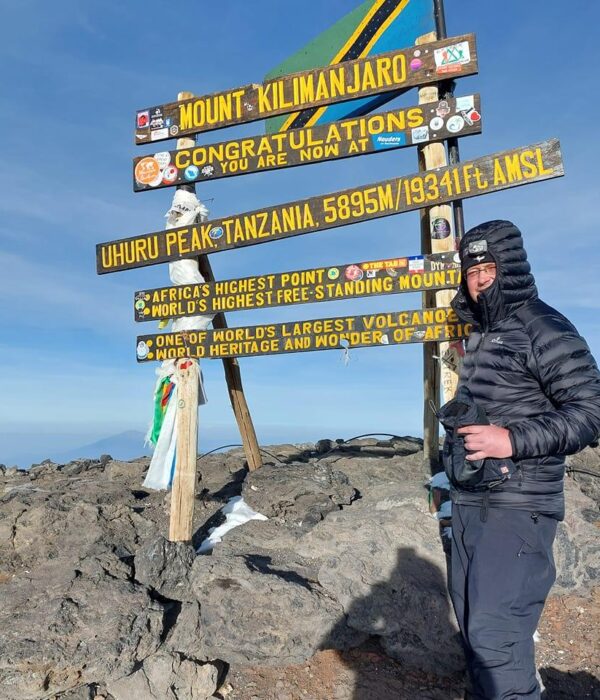
How to layer for the Kilimanjaro summit?
Climbing Kilimanjaro needs different clothing layering because the trek covers zones from tropical rainforest to arctic summit conditions. The approach uses a three-level clothing set: base layer, mid layer, and outerwear shell.
The base layer must be moisture wicking and never cotton. You pack three long-sleeved thermal tops and two sets of long johns or leggings. These are made of wool from merino sheep or synthetic fabrics. The number of bottom pieces depends on the distance of the hike: treks under one week need a single pair, and longer adventures need a pair. The base layer keeps the skin dry.
Mid layer options have a fleece pullover or a lightweight insulated synthetic jacket like a puffer. This jacket provides warmth and a down vest provides flexibility. Outerwear has a waterproof and windproof outer coat with hood. Outerwear covers waterproof trousers or overpants. They keep you dry from rain and work as a windbreaker. For lower elevations, zip off hose style convertible trousers work and allow conversion to shorts.
The summit night is the coldest part with temperatures reaching 10°C (50°F) to 20°C (68°F). Summit evening clothing covers a thermal base layer top and bottom, a fleece mid layer, and a down coat or heavy insulated jacket. The down coat is the warmest piece, rated for extreme cold, and it is non-negotiable. Summit evening gear has a waterproof shell on top. The down coat is worn as the outermost layer and the shell is under the puffer jacket. Summit night needs heavy gloves or mittens with thin inner gloves underneath. The head must be protected with a warm beanie and a balaclava. Cover your feet with thick socks. Footwear covers waterproof walking shoes or boots with ankle support, broken in before travel. Essentials include undergarments and athletic tops in fabric that dries quickly, a sun hat for lower elevations, UVprotective glacier glasses, and gaiters that keep debris and snow out of boots. Training starts 8-12 weeks before departure and includes weight training, cardio, and hill hiking with a pack.

What size backpack do I need for Mount Kilimanjaro?
A backpack for Mount Kilimanjaro has a size of roughly 20 to 30 liters. Some trekkers use a 40-liter backpack. The Osprey Talon 22 is a day pack, available in size small 20-liter (1,220 cubic inches) and size medium-large 22 liters (1,343 cubic inches). The North Face Borealis is a 29-liter backpack. A backpack has vertical tightening straps which lessen pressure from the load.
A porter carries a large carrying bag, or a main bag for gear. A pack for a single traveller is about 75 liters (4500-5000 cubic inches). A holdall has a waterproof construction, a material that stops water from getting in, and a strong zipper closure. A duffel bag has a handle strap setup and a shoulder strap system.
A bag has a maximum weight of 20 kilos (44.09 pounds). A trekker carries a small backpack for personal items, breakable items, and gear needed during the day.
Do you need different gear for different Mount Kilimanjaro routes?
Yes, you need different gear for different Mount Kilimanjaro routes. Vital gear remains consistent across all climbs because all climbers face identical conditions at the top.
Route-specific ground shapes and weather conditions affect priority items. The Lemosho trail has a wet jungle at the beginning, so waterproof layers and gaiters are needed. The Machame trail needs hiking sticks for steep descents. The Northern Circuit path is longer, so a longer mountain trail needs extra socks and spare batteries, as well as additional personal items. The Rongai path is drier and windier which is why it needs careful layering for sudden changes in temperature. All climbers must pack similar gear for the top of the mountain. Nights need heavy gloves or mittens, a balaclava, and a warm hat. You need a down jacket and a waterproof shell, with underwear layers and midlayers.
Is Kilimanjaro ultralight climbing possible?
Kilimanjaro ultralight climbing has regulatory constraints. Since 1991, the Tanzanian government requires that a trekker must have a guide who is registered, and approval comes from official travel agencies. Rangers enforce this at gates, so independent climbing is illegal. Ultralight climbing reduces gear weight and complies with regulations by having the climber carry a daypack with personal essentials, while porters handle overnight supplies. It reduces personal load but cannot remove the logistical framework.
Kilimanjaro ultralight climbing has financial effects. Entry charges cost $1350 per person and the trip length is over a week, so total expenses are between $1500 and $3500. Minimal staffing choices means a crew has a chef, a leader, and two porters. Kilimanjaro ultralight climbing has practical constraints. The peak altitude is nearly 6 kilometers (3.73 miles) high, and acclimatization is the main difficulty. Success depends on itinerary length; overall chance of reaching the top is 60%, but the Lemosho path has a 95% success rate. Shortened climbing plans raise risk of getting sick from high elevation. The mountain requires footwear, warm clothing, and protective gear, but technical equipment is not necessary. A headlamp is needed. The climber’s independence is limited to pace and personal equipment selections.

Got questions about this post?
Get free tips from John to help jumpstart your Kilimanjaro journey! Whether securing a travel visa or finding your ideal tourist destination to navigating through a list full of travel insurance policies, John will help you figure out the local tourism industry.
Chat with John