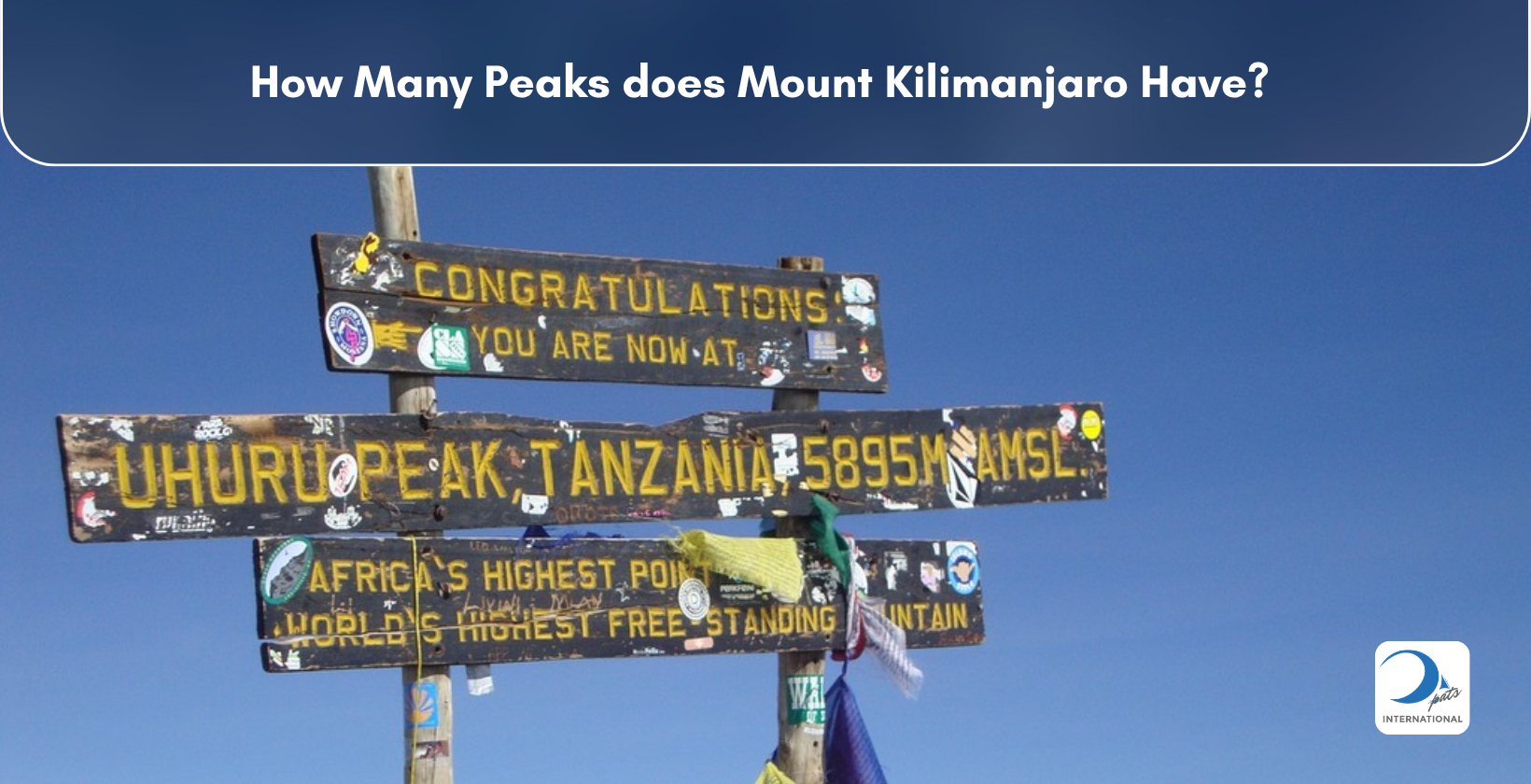
Mount Kilimanjaro has three main volcanic peaks: Kibo, Mawenzi, and Shira. Kibo cone is the tallest of Kilimanjaro’s three volcanic cones and contains three concentric craters. Crater Camp is the highest camp on Kilimanjaro at an altitude of 5,730m.
What Are Your Chances of Reaching the Summit of Kilimanjaro?

We've calculated your personalized summit success score, recommended route, and training plan. Enter your details below and we'll send it straight to your inbox.
Enter your details and we'll email your personalized summit success score, recommended route, and training plan.
🔒 No spam. Your details are kept private and never shared.
Check your inbox!
Find your personalized assessment plan.
How many peaks does Mount Kilimanjaro have?
Mount Kilimanjaro has 3 main volcanic peaks: Kibo, Mawenzi, and Shira. The mountain has a distinct shape and rises from the plains of Africa. The 3 main volcanic peaks make Mount Kilimanjaro unique. Mount Kilimanjaro is the tallest independently standing mountain on Earth. The Mawenzi peak is in the East, and the Shira peak is on the Western side. Kibo, Mawenzi, and Shira are all volcanic peaks.
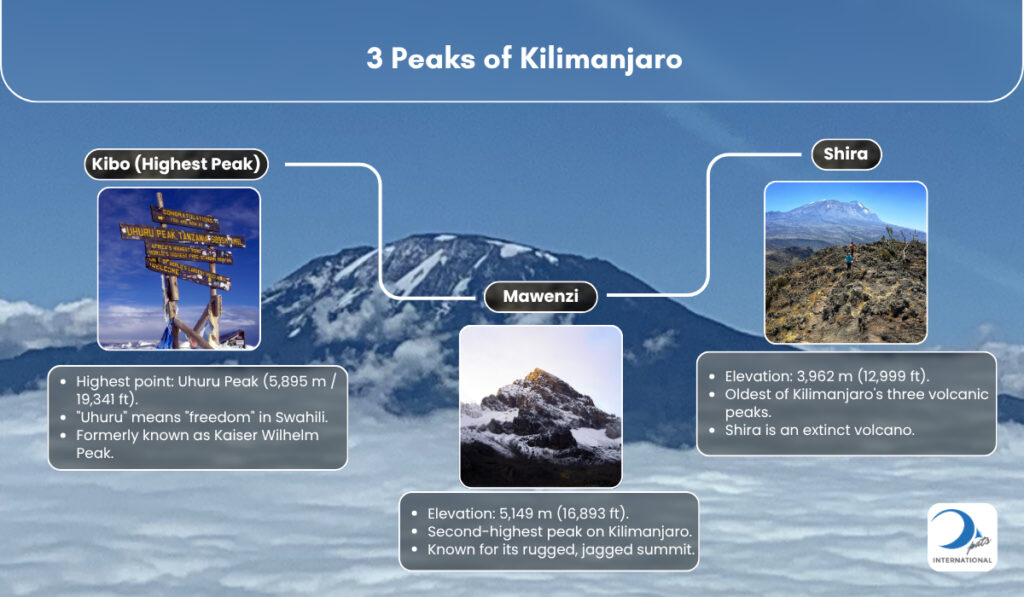
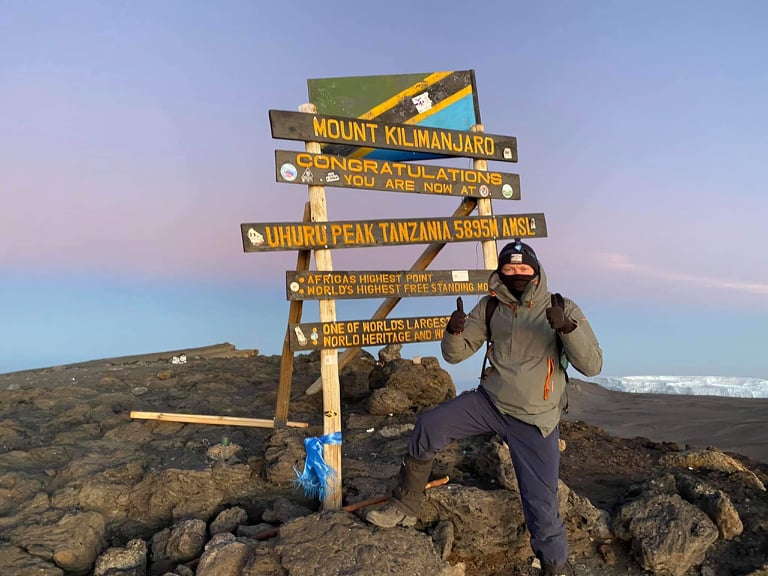
The highest peak of Kilimanjaro is the highest point of Kilimanjaro. The summit of Mount Kilimanjaro is called Freedom Summit (Uhuru Peak in Swahili). The summit of Kilimanjaro is on Kibo, and it has a height of 5,895 meters (19,340 feet) above the ocean’s surface. Mawenzi reaches 5,149 meters (16,893 feet), and Shira reaches 4,005 meters (13,140 feet). Kibo is dormant, and Mawenzi and Shira are extinct.
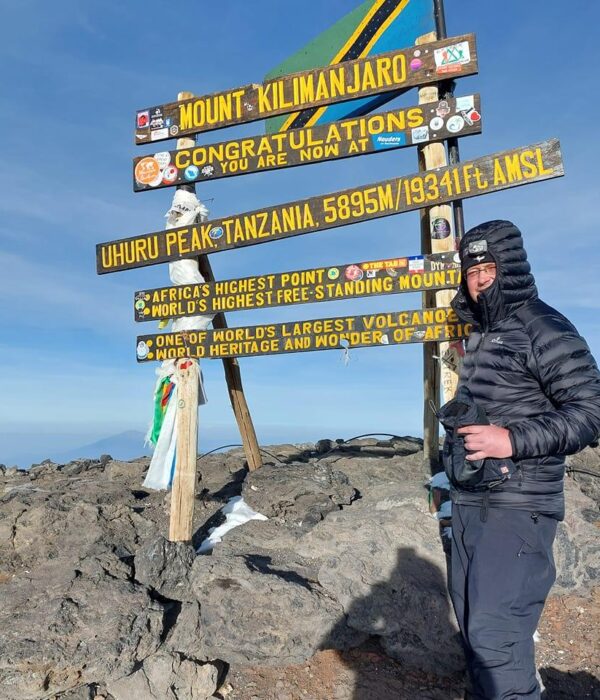
What will you find at the peak of Mount Kilimanjaro?
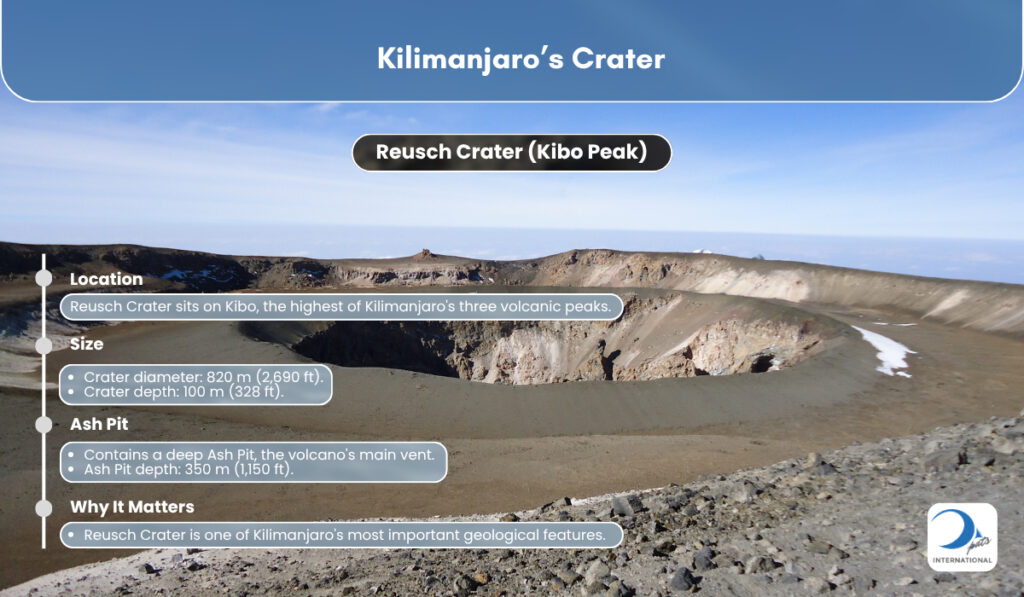
You will find glaciers and frozen areas at the peak of Mount Kilimanjaro. The peak of Mount Kilimanjaro is the top edge of the crater of Kibo. Uhuru Peak is at 5,895 meters (19,340 feet) above the ocean’s surface. The edge surrounds a crater with a width of about 2 kilometers (1.2 miles) and a depth of 100 meters (328 feet). At the bottom of the crater is the Reusch Ash Pit. Sulfurous gases escape from it because it is a central vent. Kibo stays dormant, but it is not extinct. Leftover glaciers and frozen areas cling to the crater rim. Large patches of ice cling to the inner steep sides of the depression. These glaciers and glacial ice areas have shrunk over the past century.
Does Mount Kilimanjaro have a crater?
Yes, Mount Kilimanjaro has a crater. The crater is Reusch Crater, and it is located on Kibo peak. The crater has a length of 400 meters (1,312.34 feet) and a depth of 200 meters (656.17 feet). Inside, a deep hole exists. That deep hole is an ash pit, and it is the main volcanic vent. The vent has a cylindrical shape and a depth of 100 meters (328.08 feet). Volcanic ash mounds, ice leftovers, and fumaroles are inside the crater as well. The crater was made through ancient volcanic activity, and due to residual geothermal activity, fumarolic activity exists within it. The volcano is dormant, not extinct, because magma exists beneath the surface. That is why fumaroles still appear. The last major eruption was 360,000 years ago, and the most recent activity was 200 years ago. The crater’s edge path goes to the Freedom Summit (Uhuru Peak in Swahili). The Freedom Summit has an elevation of 5,895 meters (19,341 feet). The summit offers views into the crater. Climbers cross the crater rim and stay overnight at Crater Camp, which is at approximately 5.75 kilometers (3.57 miles).
Is there a camp in the crater of Mount Kilimanjaro?
Yes, there is a camp in the crater of Mount Kilimanjaro called Crater Camp. It has an altitude of almost 19,000 feet (5,791 meters), so it is one of highest campsites on Earth. The highest point of Kilimanjaro has an altitude of about 5.9 kilometers (3.7 miles) high. Crater Camp is 1 kilometer (0.62 miles) northeast of that highest point. Hiking from Crater Camp to the top of the tallest mountain in Africa takes 60 minutes.
Access to Crater Camp is via Lemosho trail or the Northern Circuit Route. The routes have a gradual climb pattern. Climbers reach Stella Point or Gilmans Point before descending to Crater Camp. Acclimatization is vital before sleeping at Crater Camp. The camp has 50% oxygen and temperatures dropping to 20°C (68°F). The landscape is ash and scree. Crater Camp has tent-based accommodation and basic facilities. Only 5% of climbers try Crater Camp because it has a risk of acute altitude sickness. Kibo Crater was made by volcanic eruptions that blew off the summit of Kibo. It covers 2.5 kilometres at the widest point and has Reusch Crater. Reusch Crater has an ash hole, a volcanic vent.

Got questions about this post?
Get free tips from John to help jumpstart your Kilimanjaro journey! Whether securing a travel visa or finding your ideal tourist destination to navigating through a list full of travel insurance policies, John will help you figure out the local tourism industry.
Chat with John