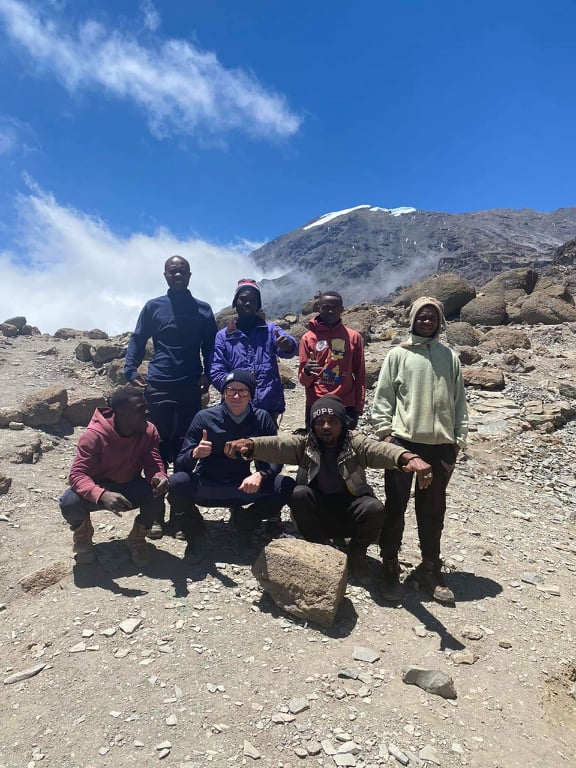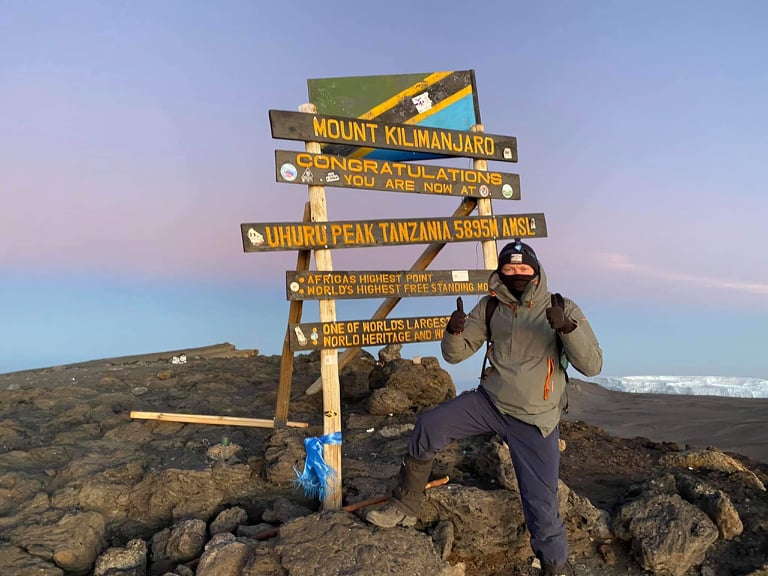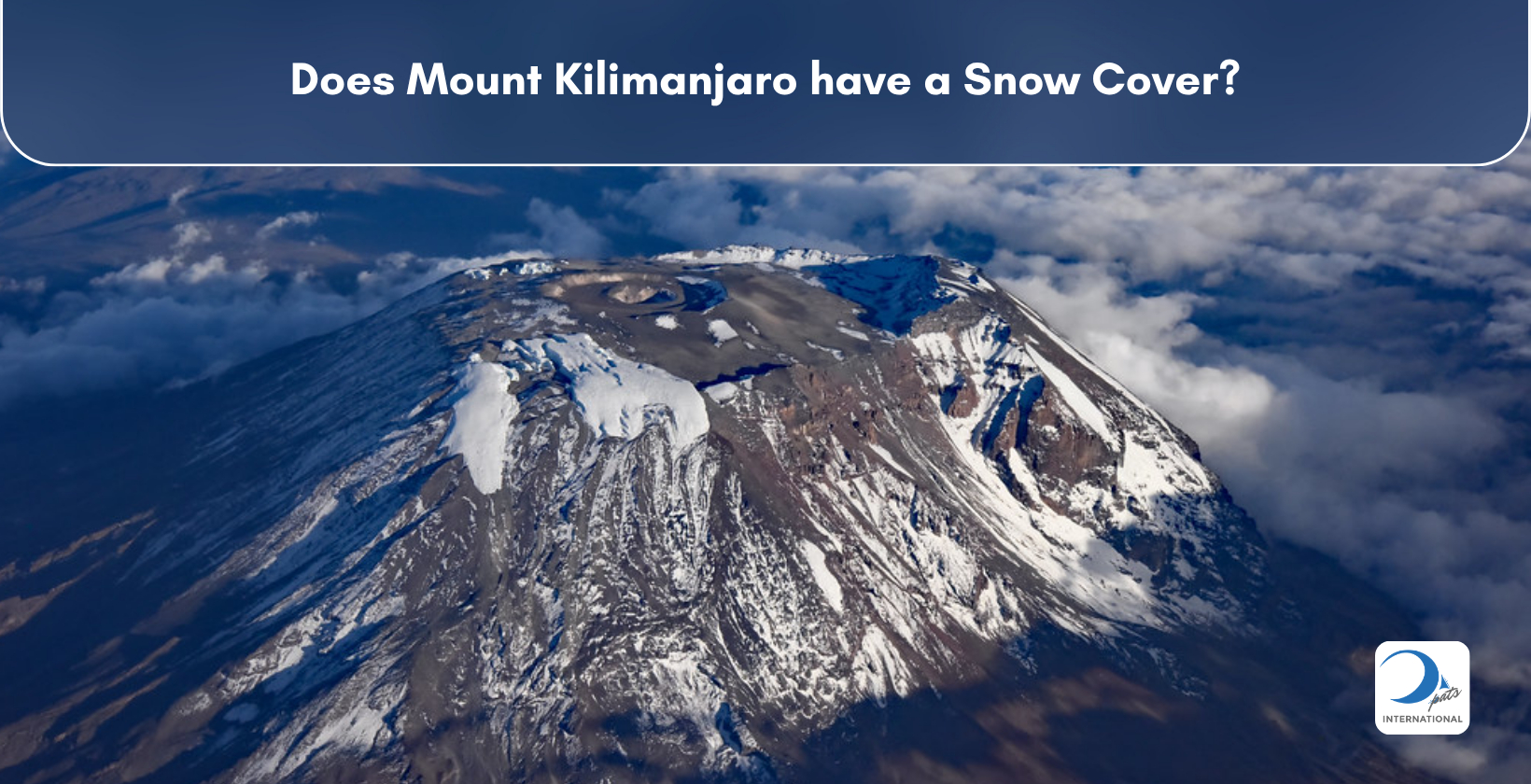
Mount Kilimanjaro’s summit is snow-capped, and snow and ice are found mainly on Kibo Peak. Snow cover builds up between February and April. The snow on Kilimanjaro is maintained by a balance between accumulation and melting, but the Kibo ice cap is melting quickly. Kilimanjaro glaciers have been shrinking since the 1880s; the ice has shrunk more than 90 percent in a century. Ice caps on Mount Kilimanjaro are predicted to melt by 2050, driven by solar radiation and global warming.
What Are Your Chances of Reaching the Summit of Kilimanjaro?

We've calculated your personalized summit success score, recommended route, and training plan. Enter your details below and we'll send it straight to your inbox.
Enter your details and we'll email your personalized summit success score, recommended route, and training plan.
🔒 No spam. Your details are kept private and never shared.
Check your inbox!
Find your personalized assessment plan.
Is Mount Kilimanjaro covered in snow?
Yes, Mount Kilimanjaro is covered in snow at the summit. Kibo, the highest volcanic cone, is snow-covered year-round. Mount Kilimanjaro has a height of about 5.9 kilometers (19,341 feet), which is why the temperature drops about 6.5 degrees Celsius per kilometer. Peak temperatures stay below freezing, and the wind exacerbates the cold. Snowfall happens at high elevation during March-May’s rainy season and November’s short rains. The first snowfall comes in late November or early December, and snow accumulates between February and April. Snow is visible year-round, but the amount changes because snowfall relies on seasonal patterns.
In 1980, the Ice-covered area spanned 20 square kilometers but reduced to 1.7 square kilometers in 2016. The snowcap diminished by over 80 percent over the past century because the ice melted due to global warming. Glaciers like Northern Icefield Kilimanjaro, Heim, and Furtwangler Glacier retreated at accelerated rates. Icecaps formed more than 11,000 years ago and will disappear by 2050. The clouds over Mount Kilimanjaro dissipate during early mornings and evenings, exposing the snowcap.
Why is Mount Kilimanjaro snow-capped?
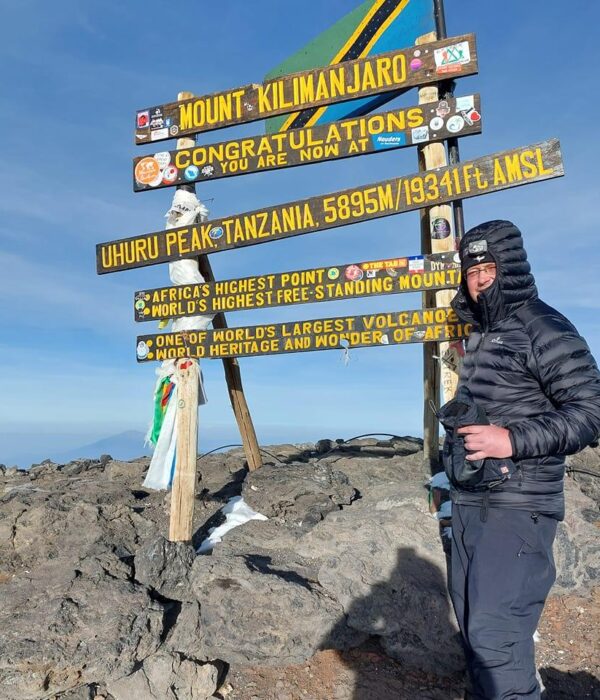
Mount Kilimanjaro is snow-capped because of its extreme elevation. The highest point of Kilimanjaro is at almost 3.7 miles. Temperatures drop at this height, and they fall by around 6 and a half degrees Celsius for every one kilometer gained. Summit temperatures fall below -20°C. This extreme cold freezes Mount Kilimanjaro. Snowfall happens throughout the year, during the long rains from March to May and the short rains in November. Winds come from the ocean near India, bringing moisture which falls as snow, adding to the frozen area.
The ice cover is permanent, so the mountain is always snow-capped throughout the year. Glaciers are sustained by factors like high altitude, which keeps temperatures below freezing. Snow gathers, compacts into ice, and becomes glaciers that last. The frozen crown is on Kibo, the highest cone; the glacier is about 4.0 kilometers high (2.5 miles) and the ice cap is above 3,962 meters (13,000 feet). The elevation of 19,341 feet (5,895 meters) allows snow to accumulate.
What is the best time to see snow on Mount Kilimanjaro?
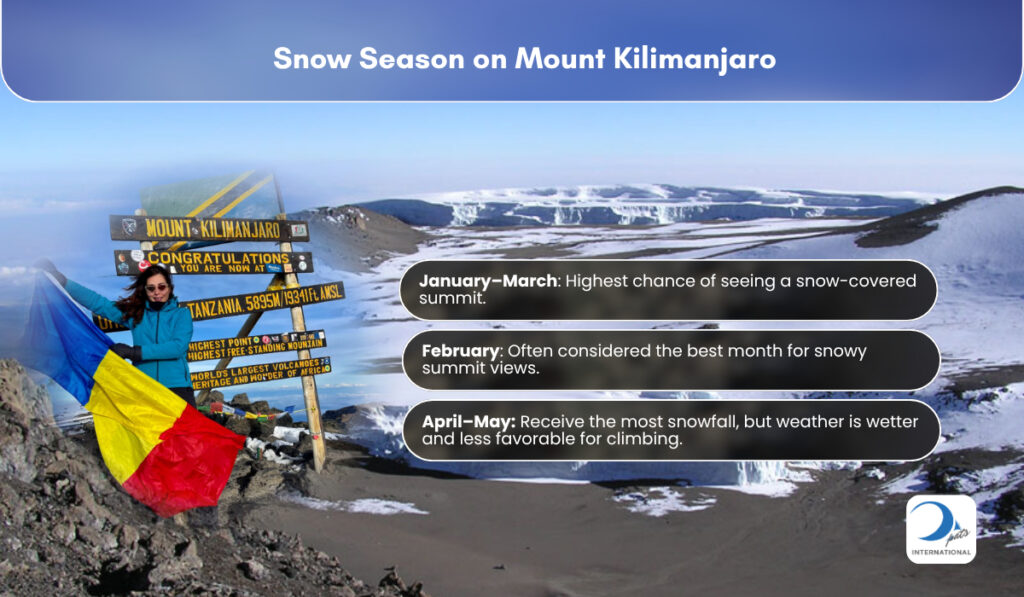
The best time to see snow and glaciers on Mount Kilimanjaro is during the dry seasons from January to mid-March and June to October. During these months, skies are clear, offering unobstructed visibility of the snow-capped peak.
Is Kilimanjaro the only mountain in Africa with snow?
No, Mount Kilimanjaro is not the only mountain in Africa with snow. Mount Kenya has glaciers as well, and the Rwenzori mountain range has glaciers on the highest peaks. Mount Stanley is the highest peak of the Rwenzori mountain range. Seasonal snow falls in the Atlas range in Morocco, Tunisia, and Algeria, but these lack permanent glaciers. Seasonal snow falls in the Drakensberg mountains in South Africa, but they lack permanent ice. Mount Kilimanjaro is the most important remaining glacial place in Africa.
Why is the snow cap on Mount Kilimanjaro melting?
The snow cap on Mount Kilimanjaro is melting due to global warming. The ice cap has been shrinking since the 1880s, losing 85% to 90% of its ice. It covered 20 square kilometers then, but the leftover ice cap covers 1.7 square kilometers today. The snow pack thinned, and the older ice was exposed to sublimation. Sublimation changes ice into moisture and is caused by solar radiation, high winds, and dry air.
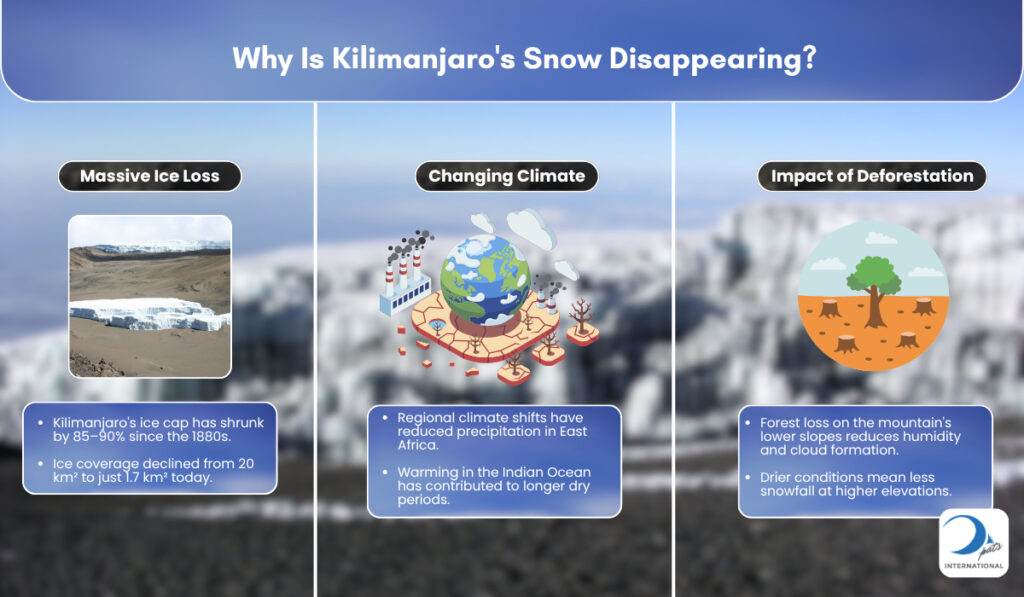
The local climate altered regionally. Annual precipitation fell at the top over the last century. Dry periods in eastern Africa are linked to warming in the Indian Ocean. Altered rainy season cycles lowered the amount of water reaching the summit. Deforestation at lower elevations cut local humidity and cloud cover. This reduced summit snowfall, and the environment grew drier. Scientists studied frozen water specimens from deep underground. Ice core sections record past conditions from the last Glacial period. Layers help quantify remaining snow and project future changes. The rate of ice loss accelerated from 1% per year between 1912 and 1953 to 2.5% per year between 1989 and 2007.
Communities rely on water supplies affected by high-altitude weather patterns. Water shortage harms agriculture and ways of living. Comparison with other tropical glaciers, like in the Andes and equatorial regions, shows a global phenomenon. Global warming impacts the cryosphere, and rising temperatures change ecosystems worldwide. Snows of Kilimanjaro are still seen but are disappearing rapidly. Projections show the ice cap will disappear between 2040 and 2060.

When will the glaciers on Mount Kilimanjaro disappear?
The glaciers on Mount Kilimanjaro are expected to disappear between 2025 and 2050. Current climatological conditions will make the glaciers vanish within several decades. Global warming will eradicate the glaciers by 2050.

Got questions about this post?
Get free tips from John to help jumpstart your Kilimanjaro journey! Whether securing a travel visa or finding your ideal tourist destination to navigating through a list full of travel insurance policies, John will help you figure out the local tourism industry.
Chat with John