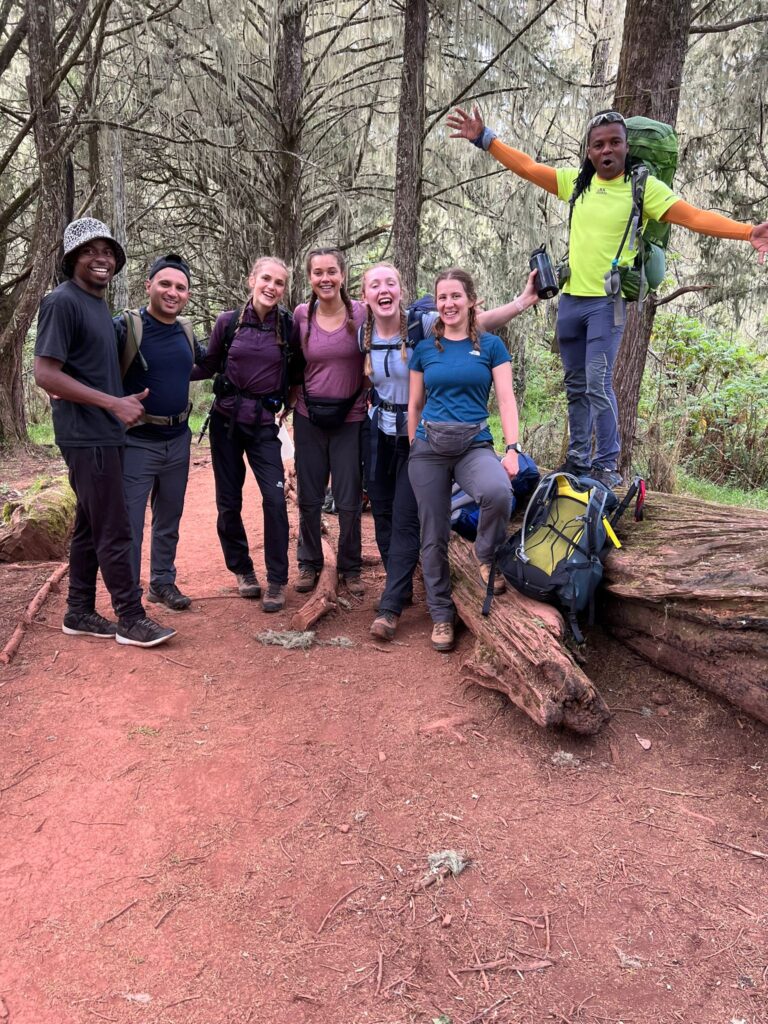
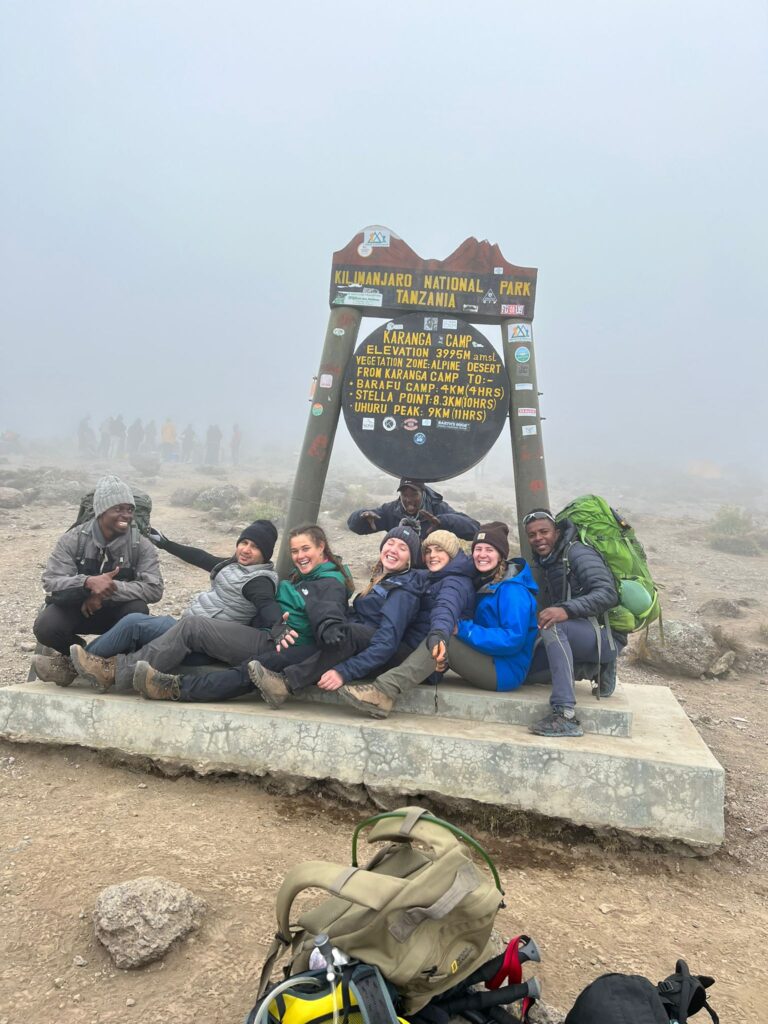
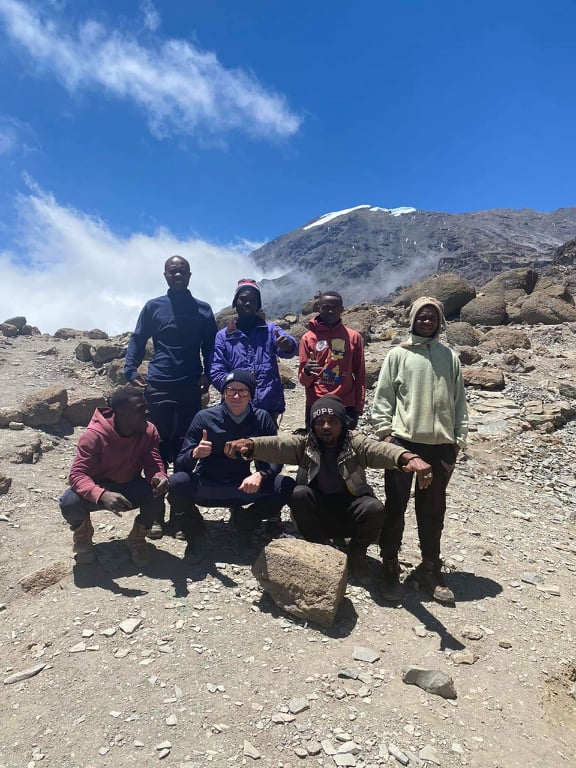
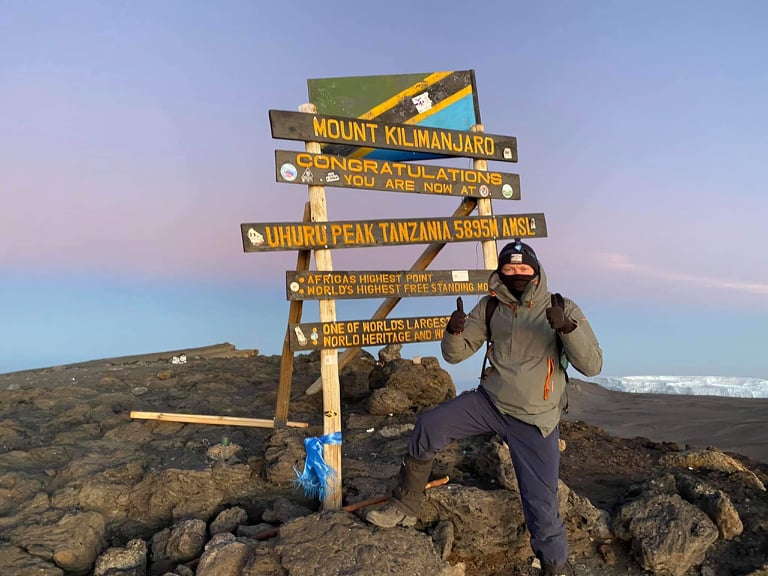
Kilimanjaro is deemed safe to climb, and it is one of the safest mountains in the world. Mount Kilimanjaro is relatively risk-free compared with other mountains of the same height. It is not extremely dangerous when it is climbed responsibly. The primary dangers associated with climbing Mount Kilimanjaro include altitude sickness, extreme weather conditions, and physical exhaustion. Dangers of climbing Kilimanjaro include acute mountain sickness and being hit by rockfall. Kilimanjaro is generally safe with proper planning, experienced guides, and enough acclimatization days.
What Are Your Chances of Reaching the Summit of Kilimanjaro?
We've calculated your personalized summit success score, recommended route, and training plan. Enter your details below and we'll send it straight to your inbox.
Enter your details and we'll email your personalized summit success score, recommended route, and training plan.
🔒 No spam. Your details are kept private and never shared.
Check your inbox!
Find your personalized assessment plan.
Is it safe to travel to Mount Kilimanjaro?
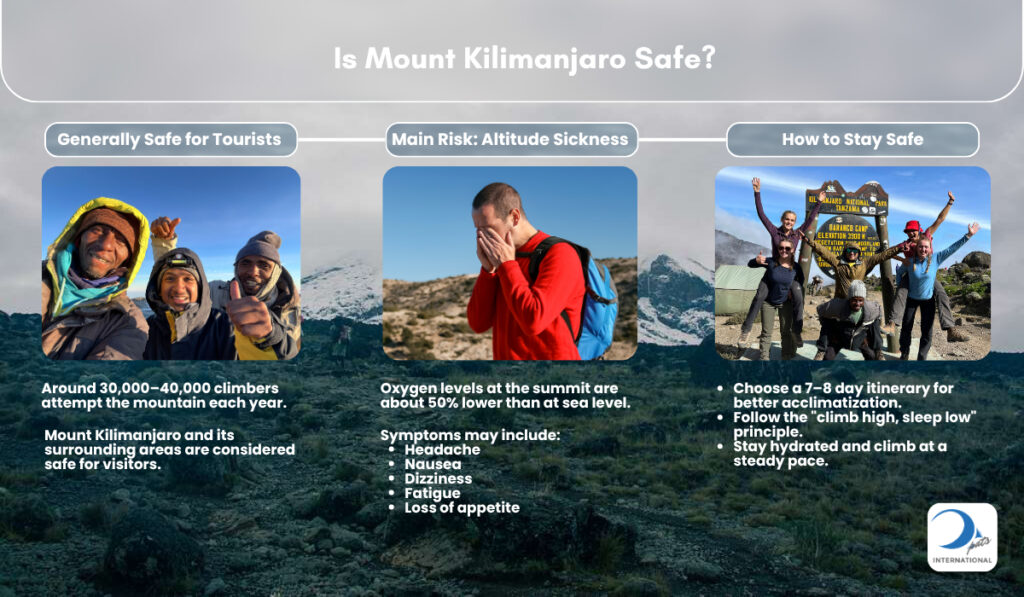
Yes, it is safe to travel to Mount Kilimanjaro. The area around Kilimanjaro is safe for visitors. The towns of Moshi and Arusha, which are starting points, are secure for visitors. Travel facilities are strong, and tourism officials check the situation continuously.
Climbing Mount Kilimanjaro is a safe activity, but you need proper, expert guidance, and appropriate precautions. 30,000 to 40,000 climbers try Mount Kilimanjaro annually, and the majority finish the climbs safely. Most visitors pick the 7 to 8 day itineraries. If travelers follow expert guidance, get ready physically, and use appropriate gear, they have high chances of succeeding with minimal incidents.
The primary risk is getting sick at high altitudes because the body struggles to adapt to low oxygen. Oxygen amounts are 50 percent lower than at ground level. High altitude illness has symptoms like headache, nausea, dizziness, fatigue, and loss of appetite. Severe cases cause cerebral edema or pulmonary edema, and there are ten fatalities per year. Acclimatization is the best precaution. Slower climbing speeds, longer itineraries, and the ‘climb high, sleep low’ principle help acclimatization. The safest climbs use 7 to 8 day itineraries, like Lemosho path or the Northern Circuit, which have the highest chance of reaching the top due to better ascent schedules.
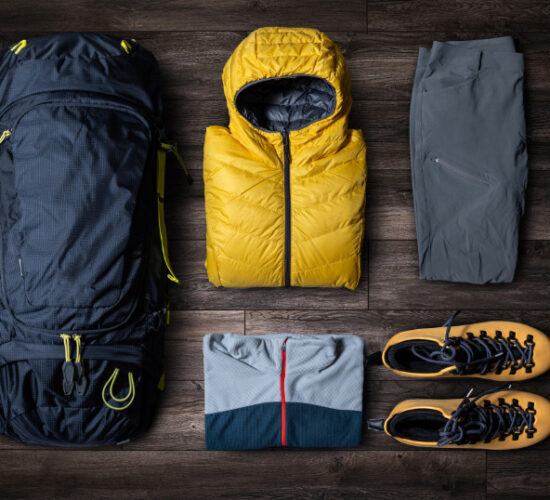
Weather conditions are a cause for concern. Temperatures range from 20°C at the base to -15°C below freezing at the summit. The best times are January to March and June to October, during dry seasons. Rainy seasons are March to May and November, and wet periods make paths hard to travel, but do not make climbing unsafe. Proper gear boosts safety, like layered clothing, waterproof walking shoes, hiking sticks, and sleeping bags rated for extreme cold. Physical fitness is important; climbers walk 6 to 8 hours daily and need basic cardiovascular fitness. Technical climbing abilities are not needed, but mental preparation is important.
Tanzanian regulations state that climbers be accompanied by licensed guides, which boosts security and cuts risks. Reputable operators supply oxygen in an emergency, have medical kits, and emergency exit plans. Guides use pulse oximeters for daily health tracking, and prevention includes proper hydration and immediate rescue procedures if symptoms worsen. Tourists should avoid cheaper companies, because low-cost providers cut precautions and have substandard equipment or unqualified guides. Travel insurance is key; insurance must cover high altitude hiking up to 6,000 meters (19,685 feet) and helicopter evacuation.
Mount Kilimanjaro is safe to travel to, visit, and hike. Danger comes from poor planning, hasty schedules, inadequate acclimatization, or low budget companies. When tourists go with established operators, follow the leader’s directions, and prioritize health, the experience is safe.
Is Mount Kilimanjaro safe to climb?
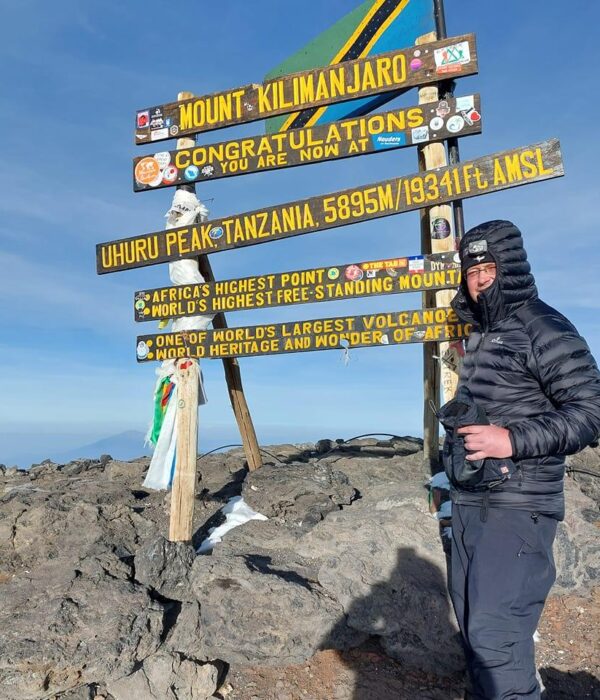
Yes, Mount Kilimanjaro is safe to climb. The mountain is not deadly, but it has risks. Every year, about 50,000 people attempt the summit, and the number of deaths is 0.03%, which is 4 to 10 fatalities. Some cases occur from getting sick from high elevation, hypothermia, or dehydration. Pneumonia and heart attacks are concerns, especially for people with cardiovascular conditions. Becoming unwell from high altitude is a danger, and severe altitude illness happens in 75% of climbers. It worsens to high altitude pulmonary edema or high altitude cerebral edema, which is when fatalities happen. Extreme altitude is a threat because the summit has less than 50% oxygen. Summiting requires climbing at night for 12 to 16 hours at high altitude, which is why physical training and medical clearance are vital.
Safety relies on choosing which way to go and duration. The Northern Circuit path helps acclimatization, so chances of success are 65% to 98%. A more rapid climb uses shorter routes which does not allow acclimatization. The western route is not encouraged as there are hazards like falling rocks; fatalities occurred between 2006 and 2015. Hazards include varying weather conditions across forest, highland, dry mountain, and arctic zones. Summit temperatures reach -20°C, and sudden storms need proper gear. Safety steps like checking your condition with pulse oximeters, guides, emergency plans, and porters save lives. Operators register with Kilimanjaro Park authority, and the mountain forbids climbing alone. The decisions of a counselor are vital for safety, and trip insurance is advised because it covers evacuation up to 6,000 meters (19,685 feet). The hike goes on trails with no ropes, no ice picks, and no risk of ice cracks, so climbers do not need technical rock climbing abilities.
I climbed Mount Kilimanjaro two years ago. This route gave time for the body to adjust. My guide watched oxygen amounts twice daily. He ordered climbing down when a teammate showed early signs of pulmonary edema.
How dangerous is it to climb Mount Kilimanjaro?
Mount Kilimanjaro has an overall moderate potential risk level. Technical mountaineering risks do not exist and the primary danger comes from altitude. Mount Kilimanjaro is at about 5.9 kilometers (3.7 miles), and the amount of oxygen falls to less than 50% of that at ground level. This altitude creates a risk of getting sick from high altitude for climbers.
Altitude-related hazards remain primary. Mount Kilimanjaro’s difficulty arises from rapid climbing and does not come from technical terrain. Climbing Kilimanjaro needs no ropes and no specialized climbing expertise. The final climb needs 12 to 14 hours of continuous hiking, and temperatures get to minus 20 degrees Celsius. Strains include cumulative physical exhaustion over trips that last several days, danger of losing water, and trouble sleeping at altitude. Other risks arise from weather conditions, slips on loose terrain during descent, and cardiovascular strain. Mount Kilimanjaro has lower technical danger than the Himalayan and Andean peaks.
The death rate is less than 10 per year. Annually, approximately 30,000 to 35,000 people attempt to climb the mountain. Most deaths occur due to severe mountain sickness. Sickness is visible through headaches, nausea, appetite loss, fatigue, and dizziness. High-altitude illness is dangerous when symptoms escalate to persistent vomiting, ataxia, confusion, shortness of breath at rest, and coughing up foam. These symptoms need immediate descent. Severe altitude sickness changes from acute mountain sickness to high altitude pulmonary edema or high altitude cerebral edema. Failure to descend when symptoms worsen contributes to harmful results. Inadequate pre-acclimatization increases risks.
Safety precautions focus on acclimatization. Routes of 7 to 9 days, like the Lemosho and Northern Circuit routes, cut risk. Safety measures stress a slow pace, hydration of 2.5 to 4 liters (0.66 to 1.06 gallons) daily, and adherence to guide instructions. Safety depends on the guide’s experience, itinerary length, and individual response to hypoxia. Expert guides use pulse oximeters for checking on health status. Typical blood oxygen level drops to 70 to 75% at summit. Accidents stay low with proper gear and guidance. The overall percentage of people reaching the top is 55 to 65%. Peak success rates rise to over 90% with optimal path choice and pacing. Risks are manageable for prepared climbers, and experienced mountaineers prioritize acclimatization over speed. The mountain stays achievable for diverse people of different ages and diverse physical ability.
Is there radiation exposure on Mount Kilimanjaro?
Yes, there is radiation exposure on Mount Kilimanjaro. UV rays rise 10% for every 1,000 meters (3,280.84 feet) above about 8,200 feet (2,499.36 meters). UV rays are double at the mountain’s peak compared to ground level. Cosmic radiation adds 36.8 millionths of a sievert during ascent. Reflective surfaces like glaciers and snow increase sun exposure. Exposure is because of the sun, freezing temperatures, and radiation.
Hypothermia is a risk above 13,000 feet (3,962 meters). Freezing temperatures, icy winds, snow, and sleet occur above 4,000 meters (about 13,123 feet). Mount Kilimanjaro has 5 weather layers, from wet jungle to arctic at the top of the mountain. Climbing Kilimanjaro needs adequate layering, sunblock SPF 40+, and sunglasses blocking 100% of sunlight’s harmful radiation.

What are the side effects of climbing Mount Kilimanjaro?
The side effects of climbing Mount Kilimanjaro are given in the list below.
- Dizziness
- Shortness of breath
- Nausea
- Diarrhea
- Heartburn
- Headache
- Fatigue
- Trouble sleeping
- Numbness
- Fluid in the lungs
Climbing Kilimanjaro causes mountain sickness in climbers, and side effects range from mild to life-threatening. Common side effects of altitude include headache, nausea, and dizziness. Shortness of breath happens from a reduced amount of oxygen in the air. Fatigue comes from physical exertion as well as reduced oxygen. Most common symptoms are headache, nausea, and fatigue, and side effects of high altitude include trouble sleeping or insomnia. Most common side effects are mild and go away with rest and acclimatization.
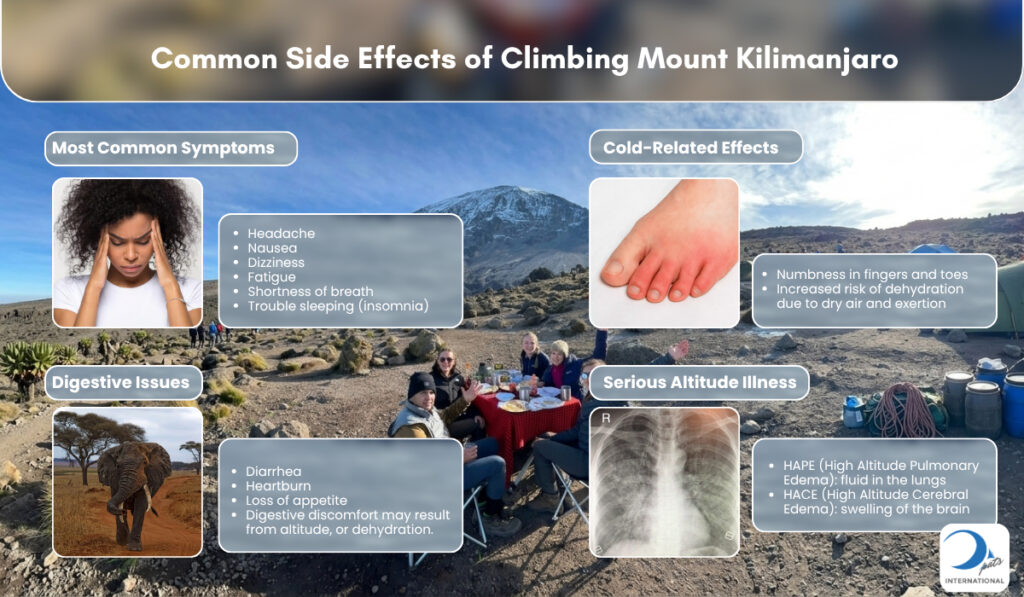
Nausea affects trekkers above about 2.5 kilometers (1.55 miles). Diarrhea happens from new food, high altitude sickness, or different water because high-altitude affects the digestive system. Heartburn comes from dietary changes and physical exertion. Numbness happens in extremities from cold temperatures and altitude effects on circulation. Dehydration is a risk because of increased fluid loss and inadequate drinking water. Serious side effects of mountain sickness include fluid in the lungs at high altitudes and brain swelling due to high altitude. 75% of climbers go up above about 3 kilometers (1.86 miles) altitude, and health problem frequencies rise with shorter routes and faster climbing speeds.
Climbers use Diamox to stop mountain sickness. Kilimanjaro causes physiological stress through hypoxia and rapid climbing, and it affects the body through lower air pressure and less oxygen to breathe. The chance of dying is 0.03% annually.

Got questions about this post?
Get free tips from John to help jumpstart your Kilimanjaro journey! Whether securing a travel visa or finding your ideal tourist destination to navigating through a list full of travel insurance policies, John will help you figure out the local tourism industry.
Chat with John