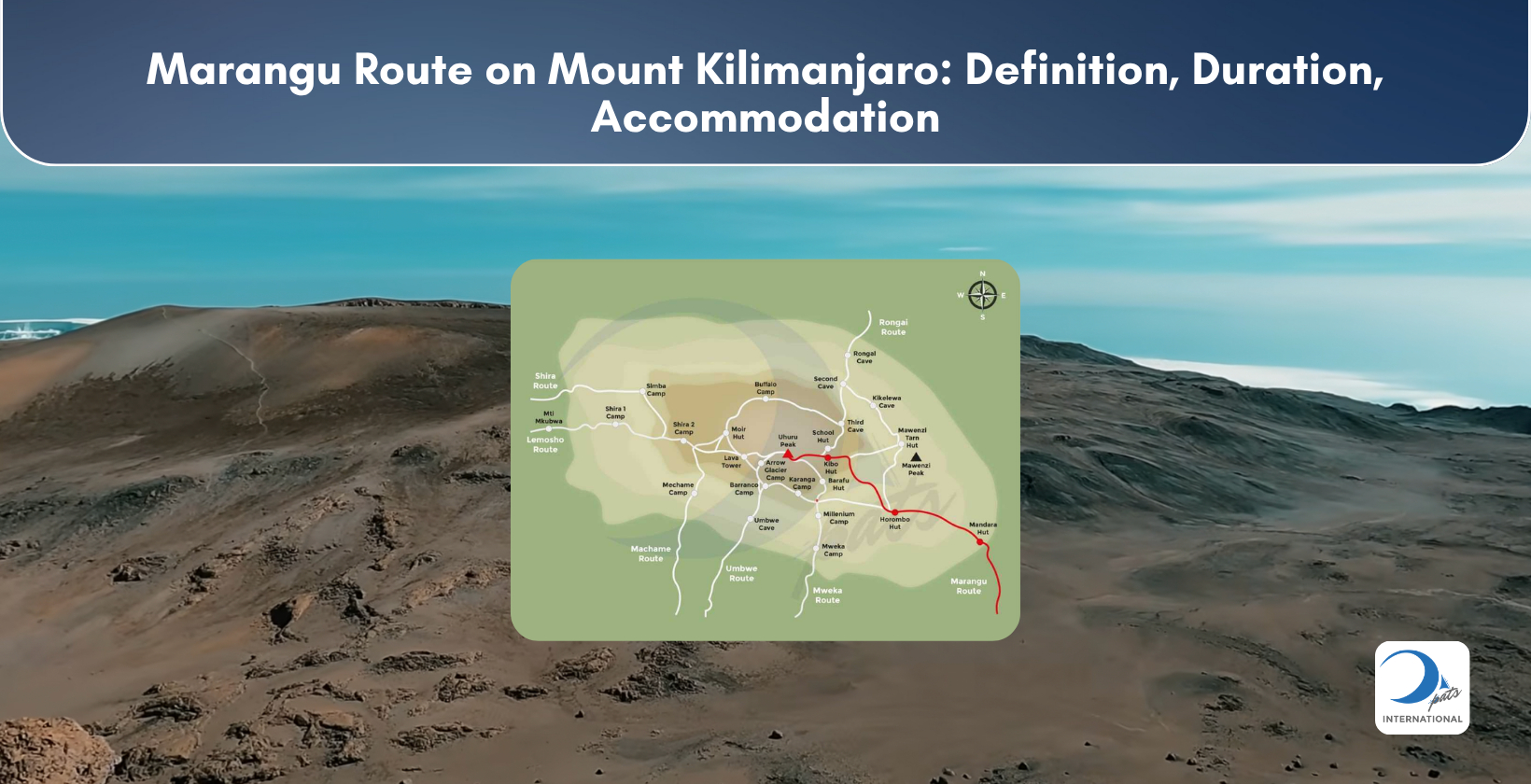
The Marangu Route is the oldest route on Mount Kilimanjaro and has the easiest ascent. The Marangu Route can be completed over five or seven days and has a distance of 72 km. The 6-Day Marangu Route is the standard itinerary because it includes an acclimatization day at Horombo Hut. The Marangu Route is the only Kilimanjaro route to offer hut accommodation; it offers dormitory-style huts.
- What is the Marangu Route on Mount Kilimanjaro?
- Is the Marangu Route suitable for climbing Mount Kilimanjaro in 5 days?
- What is the distance of the Marangu Route on Mount Kilimanjaro?
- Are there huts on the Marangu Route of Mount Kilimanjaro?
- What is the itinerary of the Marangu Route on Mount Kilimanjaro?
- What is the scenery like on the Marangu Route of Mount Kilimanjaro?
- How hard is the Marangu Route on Mount Kilimanjaro?
- What is the success rate of the Marangu Route on Mount Kilimanjaro?
- How much does the Marangu Route cost?
What is the Marangu Route on Mount Kilimanjaro?
The Marangu Route, known as the “Coca-Cola Route”, is the most well established trekking route on Mount Kilimanjaro. The Marangu route is a popular choice among the seven Kilimanjaro ascent routes because it is an easier climb, given its gradual slope and direct path. The Marangu route approaches the summit of Kilimanjaro from the southeast.
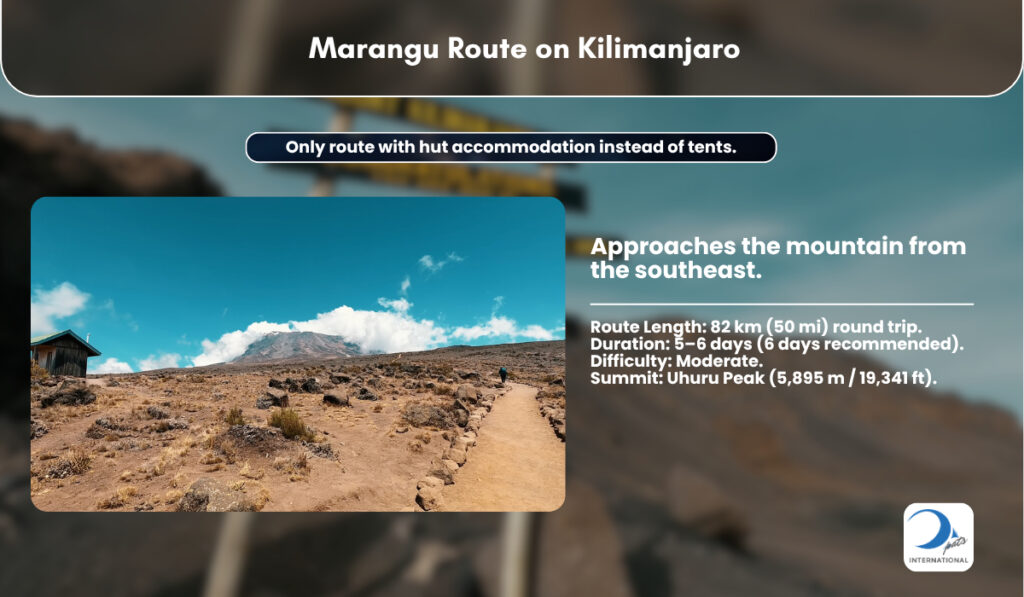
The Marangu Route is the only route where you can sleep in huts, so no camping gear is required. These mountain huts provide protection from the elements. The huts are Kibo Huts, Horombo Hut, and Mandara Huts. Mandara Huts has 60 bunk beds, Horombo Hut has 120 bunk beds, and Kibo Huts has 60 bunk beds. The approach is from the southeast, and the trail starts at Marangu Gate. The ascent and descent use the same trail, which is straightforward but monotonous.
The total walking distance is 73.5 km (45.5 miles) with an ascent distance of 36.75 km (22.8 miles). The typical duration is 5 days, but a 6-day option includes an acclimatization day at Horombo Hut. The 5-day plan has a success rate of about 27%, while the 6-day plan improves it to over 50% or even 56% with some operators. The route passes through giant cacti fields, alpine meadows, vast grasslands, and the high-altitude desert of the Saddle.
Is the Marangu Route suitable for climbing Mount Kilimanjaro in 5 days?
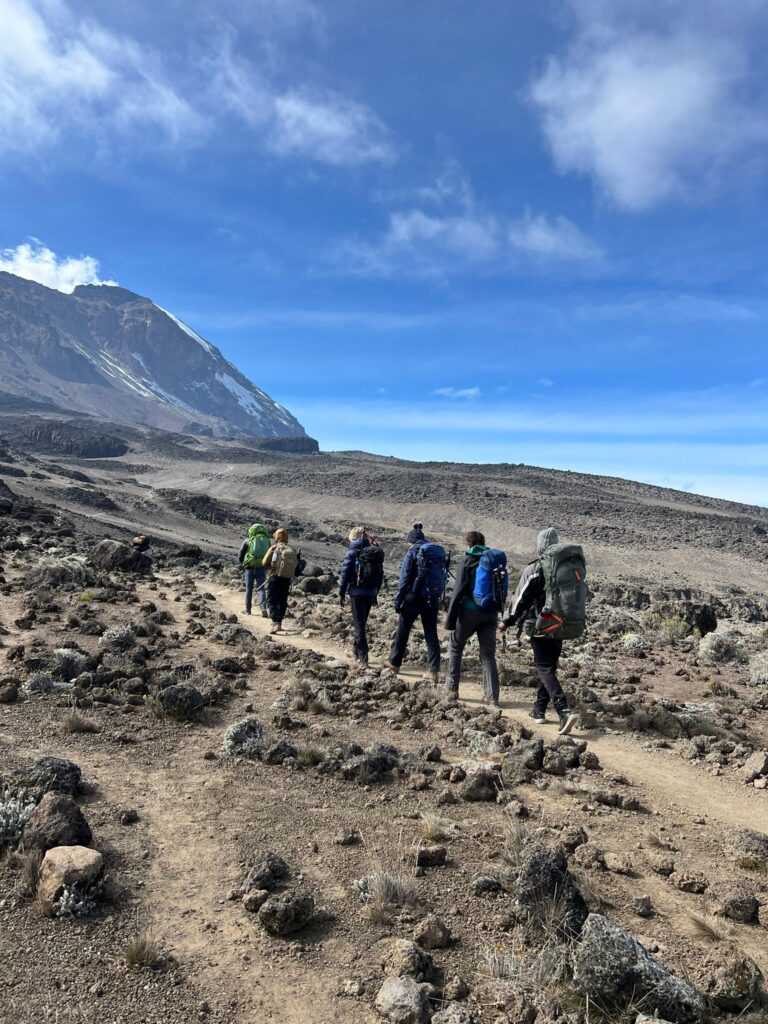
The Marangu Route is not suitable for climbing Mount Kilimanjaro in 5 days as it does not let a climber acclimatize well. Elevation gain averages 1,050m (3,445ft) per day on the 5-day plan which is too quick for most bodies to adjust properly. The 5-day plan makes the chance of reaching the top only 27-42%. Trekkers using the 5-day route often develop altitude sickness and do not make it to the summit. Because of the short acclimatisation time, the 5-day Marangu route is recommended only for experienced high-altitude trekkers with good prior acclimatization.
The 6-day Marangu route is suitable. The 6-day choice makes the chance of reaching the top 51-56% or even above 56%. This is because the 6-day itinerary has an acclimatization day. The extra acclimatization day at Horombo Hut significantly improves summit success rates and reduces the risk of altitude-related issues. The 6-day Marangu route is moderately challenging and is strongly recommended by operators.

What is the distance of the Marangu Route on Mount Kilimanjaro?
The Marangu Route has a distance of approximately 50 miles or 82 km. The gate-to-gate distance is 72.5 kilometres (45.0 miles). The ascent and descent distance is 36.75 km (22.75 miles). Total walking distance is 73.5 km (45.5 miles) or 45.5 miles (73.5 km).
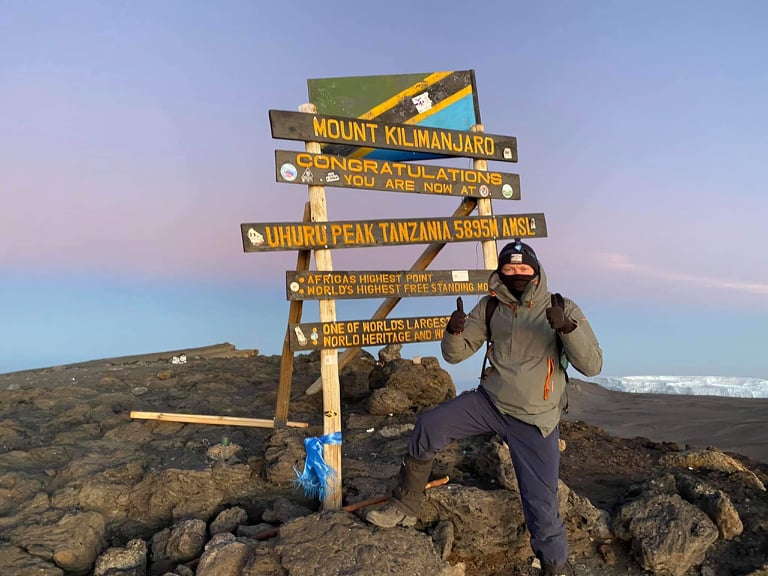
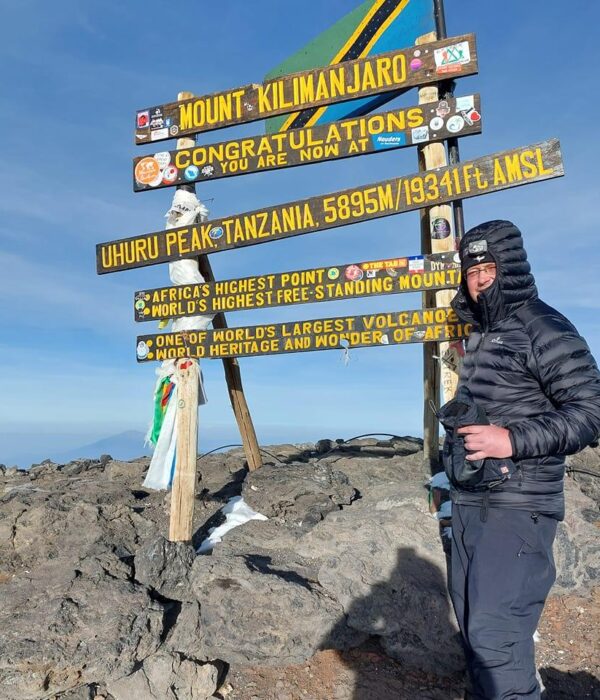
The Marangu route altitude gain is gradual and not strenuous. The total ascent and descent is 4,270 meters (14,009 feet). The Uhuru Peak is the summit of Kilimanjaro, with an altitude of 5,895 metres (19,341 feet). The route reaches Uhuru Peak via Gilman’s Point on the crater rim at 18,700 ft (5,700 m). Because the Marangu Route uses a go and return trail, you go up and down on the same path. That is why the distance is the same for the ascent and descent.
Are there huts on the Marangu Route of Mount Kilimanjaro?
Yes, there are huts on the Marangu Route of Mount Kilimanjaro. Marangu Route is the only route on Mount Kilimanjaro that offers hutted accommodation: Mandara Huts, Horombo Hut, and Kibo Huts. Trekkers sleep in permanent huts at overnight stops.
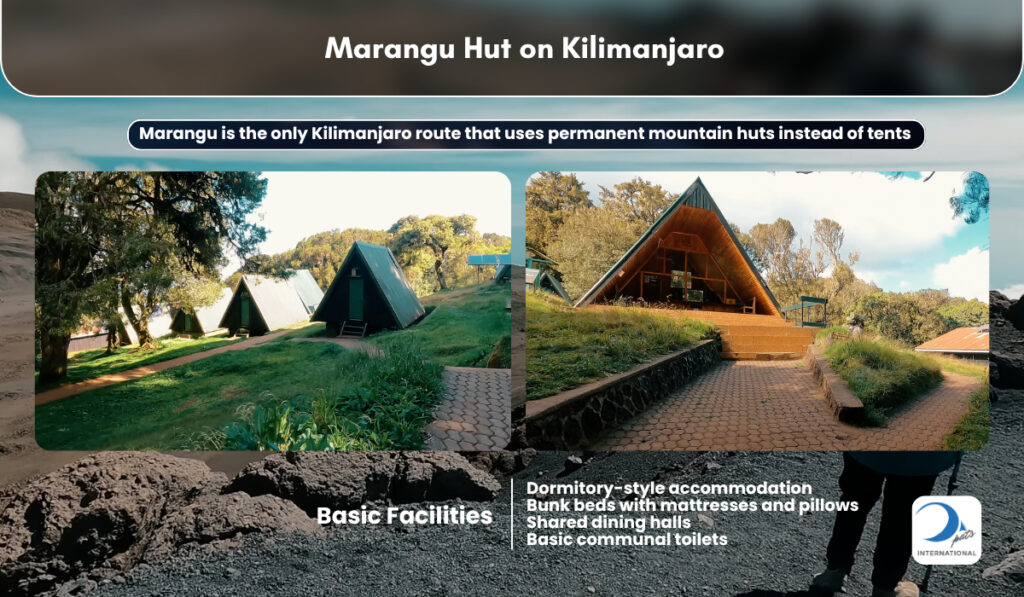
Mandara Huts is the first hut, with dormitory-style lodging. Mandara A-frame Huts have solar lighting, piped water, and flush toilets, with room for 70 trekkers. Horombo Hut, at 12,205 feet (3,720 meters), has capacity for 120 trekkers. Kibo Huts, at 15,420 feet (4,700 meters), has capacity for 60 trekkers. Sleeping areas have bunk beds with mattresses and pillows. Each camp has mess halls where trekkers eat. The huts give shelter from rain and wind.
What is the itinerary of the Marangu Route on Mount Kilimanjaro?
The Marangu Route itinerary on Mount Kilimanjaro is available in five or six days. The six day Marangu Route is the recommended version because it has an additional acclimatization day at Horombo Hut. It improves acclimatization and has high summit success rates. The five day Marangu Route is a shortened variation that does not include an acclimatization day, which is why trekkers using it often develop altitude sickness. The route covers 72 kilometres and ascends and descends by the same trail, approaching the summit from the southeast.
Day 1 hikes from Marangu Gate at 1,879m (6,165 feet) to Mandara Huts. The distance is approximately 8 km (5 miles) and trekking time is 4 hours. The habitat is Montane forest. Mandara Huts have an elevation of 2,720m (8,924 feet) and are permanent sleep huts. Day 2 treks from Mandara Huts to Horombo Huts. The distance is approximately 6.8 miles (11 km) and trekking time is 6 hours (360 minutes). The habitat is Moorland, and Horombo Huts have an elevation of 3,720m (12,204ft).
Day 3 is an acclimatization day at Horombo Hut. Trekkers do an acclimatisation walk to Zebra rocks or the base of Mawenzi peak, and then return to the hut. This extra day gives a much better chance of reaching the summit. The five day Marangu Route skips this rest day, so Day 3 treks straight from Horombo Huts to Kibo Huts. That very fast ascent is why altitude sickness affects many climbers on that schedule.
For the six day version, Day 4 treks from Horombo Huts to Kibo Huts. The trekking time is 5 hours through Alpine desert and semi-desert habitat. Kibo Huts have an elevation of 4,720m (15,485.6 ft) and are the summit night starting point. The summit day is the most challenging part. Climbers leave Kibo Hut at midnight and ascend steeply via Gilman’s Point to Uhuru Peak. The ascent distance is approximately 5.4 km (3.4 miles) with a hiking time of 9 hours. The habitat includes glaciers, stone scree, and an ice-capped summit. Uhuru Peak is at 5,895 metres (19,340 feet). After summiting, the descent goes down to Horombo Huts, covering about 9.79 miles (15.75 km) in 5 hours (300 minutes). This day is Day 5 in the six day plan, or Day 4 if you are on the five day variation.
The final day treks from Horombo Huts to Marangu Gate. The distance is approximately 11.8 miles (19 km) and trekking time is 7 hours, passing through the rainforest. A vehicle then meets trekkers at Mweka Village and drives back to the hotel in Moshi. Because Marangu Route uses the same trail up and down, the descent retraces the path past familiar sights and sleeping huts, and you finish at the Marangu gate.

What is the scenery like on the Marangu Route of Mount Kilimanjaro?
The Marangu Route is entirely within Kilimanjaro special nature area and needs authorizations from park managers. The scenery on Marangu Route is beautiful and diverse, ranging across four habitats. Trekkers experience a distinct change in vegetation each day, because the trail passes through rainforest, arctic summit, alpine desert, and moorland.
The first leg takes you through the rainforest. The forest on the mountain contains eucalyptus trees and various species of birds. You can spot colobus monkeys, and black-and-white monkeys are visible in the canopy. Trail winds through lofty trees, towering in moss and giant air plants.
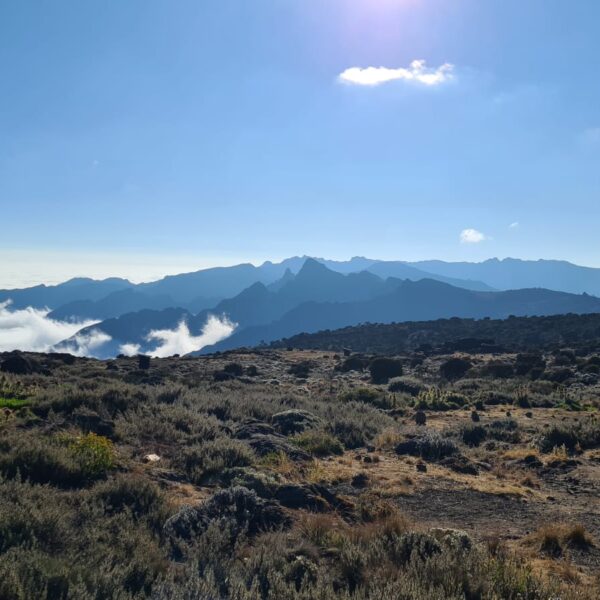
Above about 2,743 meters (9000 feet), the Marangu Route land changes to moorland. Huge plants like African violets are endemic to high-altitude highlands, and the tall mountain is visible. The Horombo Hut offers views of Mawenzi Peak and Kibo, making it a scenic overnight stop.
After moorland, Marangu Route ascends through alpine desert. The ascent goes across Saddle, which is a high, cold area with no plants, linking big hill and old hill. Saddle has an elevation of about 4,000 meters (13,123 feet), and the terrain is gravel with no vegetation. You travel through desertlike alpine areas and past lunar landscapes. The top part of the climb is a frozen arctic summit above 4.83 kilometers (3 miles), where glaciers and white snow areas cover views. Dawn views from Stella Point and Uhuru Peak at about 5.9 kilometers (3.7 miles) are very beautiful.
How hard is the Marangu Route on Mount Kilimanjaro?
The Marangu Route is deemed the easiest route on Mount Kilimanjaro, but this reputation often misleads. Many people choose Marangu thinking it is the “easiest” route, and the gentle slope and comfortable walking path add to this perception. However, the short time frame adds to difficulty, and the quick ascent makes altitude acclimatization difficult. Trekkers often develop altitude sickness, and only a quarter to a third of climbers on this route reach the summit. The average summit success rate depends on the number of days; for the 5-day trek, success is low, which is why the route is ranked 7 out of 10 in difficulty.
The route has a gradual elevation gain that is not strenuous on most days, but the final summit day involves trekking from Kibo Camp to Uhuru Peak. This trekking is half a day and night, with temperatures below freezing, and causes fatigue and strains. However, if you take the 6-day variation, it is better, and your chance of reaching the top is nine out of ten. Certified guides at Hike Kilimanjaro pace your climb correctly and monitor your health. So, the Marangu Route is a serious climb, not because of steepness, but because of limited time and the altitude challenge.
What is the success rate of the Marangu Route on Mount Kilimanjaro?
The Marangu Route success rate depends on the duration of the trek. On a 5-day route, summit success rate starts at 42%. Because of rapid ascent, altitude sickness is the main reason people turn back. With the 6 day route, the success rate improves. An extra night at Horombo helps acclimatization. The 6-day Marangu success rate is between 51-56%. Marangu Route has the lowest summit success rates out of any route. Its rapid ascent and short profile cause this lower success rate.
How much does the Marangu Route cost?
The Marangu route cost varies depending on guide service and group size. Prices change by the number of people in the group. The Marangu Route has durations of 5, 6, or 8 days. The 5-day Marangu Route costs $3000. The 6-day Marangu Route is the standard itinerary, with prices from $3300 to $3700. The 8-day Marangu climb route costs $3990. These treks include hut accommodation, and hut fees are $50 to $60 per night per person. Conservation fees cost $70 per day. Meals and a certified Kilimanjaro guide are included. The Marangu Route is affordable due to its shorter duration, but it is not ideal if you want privacy because it is a popular route. The Marangu Route is the only route with hut accommodation, so you do not need to sleep in tents.

Got questions about this post?
Get free tips from John to help jumpstart your Kilimanjaro journey! Whether securing a travel visa or finding your ideal tourist destination to navigating through a list full of travel insurance policies, John will help you figure out the local tourism industry.
Chat with John