
Mount Kilimanjaro has a height of 5,895 meters, and Mount Everest has a height of 8,848.86 meters. Everest is the highest mountain on Earth. Kilimanjaro is the highest free-standing mountain in the world. Kilimanjaro is a trekking peak, so it requires no technical climbing skills. But it has steep ascents and altitude gains within a few days, which is why the risk of altitude sickness is higher on Kilimanjaro. Everest is a technical mountaineering challenge because it requires experience with ice and has extreme altitude.


- What is the difference between Mount Kilimanjaro and Mount Everest?
- Which is taller: Mount Everest or Kilimanjaro?
- What is harder to climb: Mount Everest or Kilimanjaro?
- Is climbing Mount Kilimanjaro harder than Everest Base Camp (EBC)?
- What is more dangerous: Mount Kilimanjaro or Everest?
- How much time does it take to climb Mount Kilimanjaro and Everest?
- How to train to climb Mount Kilimanjaro and Everest?
- What is the best time to climb Kilimanjaro and Everest?
- Can you climb Mount Kilimanjaro and Everest year-round?
- What are the accommodation options on Mount Kilimanjaro and Mount Everest?
- Which climb has better views: Mount Everest or Kilimanjaro?
- What is the cost of tours for Mount Kilimanjaro and Everest?
What is the difference between Mount Kilimanjaro and Mount Everest?
The difference between Mount Kilimanjaro and Mount Everest is given in the table below.
| Aspect | Kilimanjaro | Everest |
| Location | Africa | Asia |
| Type | Stratovolcano | Peak |
| Status | Dormant (Free Standing) | Mountain Range |
| Altitude | 6,000 meters (19,685 feet) | 8,840 meters (29,000 feet) |
| Difficulty | No technical | Technical |
| Fatalities | Fewer | 300 |
| Death rate | Below 0.001 | 12 percent |
| Paths | 7 | Fewer |
| Cost | 3000-6000 dollars | 50000-150000 dollars |
Mount Everest and Mount Kilimanjaro are both climbing peaks. Mount Everest sits in Asia and is part of the Himalayan range. Mount Kilimanjaro is located in Africa. Mount Everest has a height of 8,840 meters and is the highest point above ocean level. Mount Kilimanjaro summit has a height of 6,000 meters. Everest’s extreme elevation causes severe physiological stress, while Kilimanjaro has high high-altitude sickness.
Mount Everest requires extensive experience, technical climbing abilities, and oxygen gear. It has severe climbing rules and traverses glaciers and extreme high mountain land. Mount Kilimanjaro needs no technical climbing, and no climbing background. Kilimanjaro is a trekking peak with seven well-known hiking paths, while Everest has fewer standard approaches. Kilimanjaro’s ecosystems include polar areas, rainforest, and high mountain barren land. Mount Kilimanjaro has fifty thousand hikers annually. Mount Everest has about three hundred known fatalities and a death rate of 12 percent. Kilimanjaro has fewer recorded deaths.

Which is taller: Mount Everest or Kilimanjaro?
Mount Everest is taller. Mount Everest has a height of 8.8 kilometers (5.5 miles). Mount Kilimanjaro has a height of approximately 5.9 kilometers (3.7 miles). SMount Everest has the title of the tallest mountain globally, and it is the highest mountain above ocean level.
Mount Kilimanjaro is the tallest mountain that stands alone from base to peak. Its prominence from base to peak is about 4.9 kilometers (3.04 miles). Mount Everest is a mountain that is part of a chain, so its prominence from base to peak is about 3.6 kilometers (2.2 miles). Because of this, from base to peak, Mount Kilimanjaro is taller. It is a standalone volcanic mountain, while Mount Everest formed by tectonic uplift in the Himalayan mountain range.
Everest’s starting point has an elevation of 5.3 kilometers (3.3 miles). Mount Kilimanjaro’s summit has an elevation of about 5.9 kilometers (3.7 miles). Everest’s starting point is lower than Mount Kilimanjaro’s summit by 0.531 kilometers (0.330 miles). Mount Kilimanjaro’s summit is higher than Everest Base Camp.
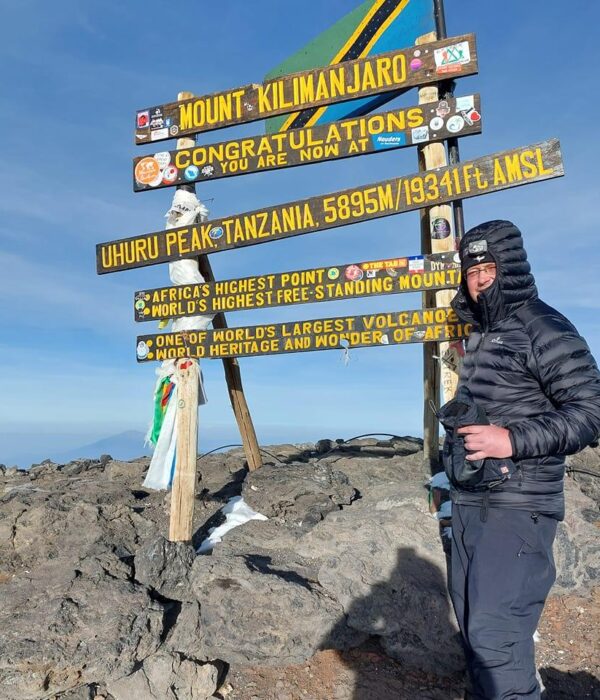
What is harder to climb: Mount Everest or Kilimanjaro?
Mount Everest is harder to climb than Kilimanjaro. Mount Everest has an elevation of 8,849 meters (29,032 feet), higher than Kilimanjaro’s 5,895 meters (19,341 feet). It requires climbing on frozen surfaces with anchored ropes, and breathing aid above about 7,925 meters (26,000 feet). Kilimanjaro is a nontechnical trek, and it does not need ropes or prior mountain climbing skills. Its maximum slope is a gentle incline, unlike Mount Everest’s steep frozen cliffs.
Mount Everest has a fatality rate of 1% for climbing attempts, and Kilimanjaro has a death rate of 0.03%. On Mount Everest, threats like avalanches, falling into crevasses, and brain swelling exist. High-altitude illness is the main threat on Kilimanjaro. Human bodies cannot live longterm above 8,000 meters (26,247 feet), which is why supplemental oxygen is used above 7 kilometers (4.35 miles) on Everest. Kilimanjaro does not need bottled oxygen because its summit is nearly 3.7 miles (5.9 kilometers), and atmospheric pressure is at 49% to that at sea level. Mount Everest’s atmospheric pressure is at 33% to that at sea level, which is why the area above 8 kilometers (5 miles) is extremely difficult for survival.
Mount Everest needs years of prior climbing background and is not fit for beginners. Kilimanjaro suits beginners and needs minimal experience. The summit push on Kilimanjaro starts around midnight, and climbers climb from 2.9 miles (4.7 kilometers) to the summit in about three days. Mount Everest climbers do rotations between starting camp and Camps 1-3. Mount Everest’s base camp altitude matches Kilimanjaro’s top of the mountain’s height. Due to its nontechnical nature, Kilimanjaro has a climb completion rate of 65-85%, while Mount Everest has a 60% chance of reaching the top.
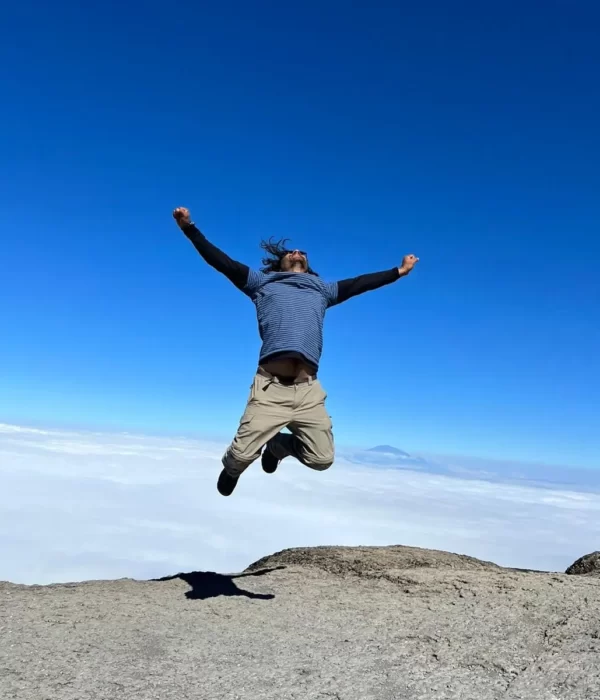
Is climbing Mount Kilimanjaro harder than Everest Base Camp (EBC)?
No, climbing Mount Kilimanjaro is not harder than climbing Everest Base Camp (EBC). Mount Kilimanjaro is a mountain with an elevation of 5,895 meters (19,340 feet). Everest Base Camp is a camp with an elevation of 5,364 meters (17,598 feet). Kilimanjaro’s trek is a climb to the top and requires reaching the summit. Everest Base Camp trek is a trip with a set goal that stops at glacier camp and does not entail technical climbing. Climbing Everest Base Camp is easier because of this difference.
Kilimanjaro routes take five to nine days whereas the Everest Base Camp trek needs roughly two weeks. EBC trek’s daily distance is 6 to 9 miles (9.7 to 14.5 kilometers), and its hiking length is about 81 miles (130.4 kilometers). Kilimanjaro’s daily distance is between 5 and 15 kilometers (3.1 and 9.3 miles). Shorter routes raise risk on Kilimanjaro, because fast climb causes higher acute altitude sickness frequency. Longer routes aid acclimatization, which is why longer duration helps better acclimatization. Everest Base Camp route goes through Namche Bazaar, Dingboche, Lobuche, and Tengboche, and has a detour to Black Rock summit. Kilimanjaro summit night is the hardest. It starts from Barafu Camp or Kosovo Camp, needs 10 to 16 hours of hiking, reaches about 4,000 feet (1,219 meters), has loose scree and possible snow, and has extreme altitude and cold. Everest Base Camp’s hike builds up strain over days but its route has a gradual ascent and has a way through the Khumbu Icefall. EBC’s cumulative load makes it challenging, but the single-day push on Kilimanjaro is more strenuous.
Kilimanjaro’s chance of reaching the top is 60-70% on five-day treks. EBC’s success rate exceeds nine out of ten. Everest Base Camp has lodging and dining facilities whereas Kilimanjaro requires camping and help from porters. EBC needs helicopters for evacuation or long walkout whereas Kilimanjaro has a quicker descent. High altitude affects both treks. Due to these factors, Everest Base Camp is easier. Neither trek needs technical climbing skills.

What is more dangerous: Mount Kilimanjaro or Everest?
Mount Everest is more dangerous than Mount Kilimanjaro. Mount Everest has a death rate of 12% per climb to the top, while Mount Kilimanjaro has a death rate of only 0.03% per climb attempt. Mount Everest has a deadly area above about 5 miles (8.05 kilometers) up, which is why it needs supplemental oxygen. Without oxygen, climbers face hypoxia and sickness in that death zone. Mount Kilimanjaro, at 5,895 meters (19,340 feet), does not have such an oxygen-poor death zone, so it does not need supplemental oxygen.

Environmental dangers make Everest more dangerous. Mount Everest has crevasses, avalanches, and a frozen river of ice. Mount Kilimanjaro does not have icy terrain, crevasses, or avalanches. That is why Kilimanjaro does not need technical climbing skills or gear for climbing on frozen surfaces. Everest requires ropes, technical climbing abilities, and years of preparation. Kilimanjaro needs months of preparation and has a high success rate of 65 to 95 percent. Everest has a chance of reaching the top of only 60 percent, due to its narrow times of good weather and risks. Mount Everest has more than 300 dead climbers and about 510 deaths per year, while Mount Kilimanjaro has around ten deaths per year. For mountaineering, Kilimanjaro is much safer than Everest.

How much time does it take to climb Mount Kilimanjaro and Everest?
Climbing Mount Kilimanjaro takes five to 14 days. Mount Everest takes two months to two and a half months. The Everest advance camp hike is 12 days to two weeks, and the base camp trek is 2 weeks to three weeks.

How to train to climb Mount Kilimanjaro and Everest?
To train to climb Mount Kilimanjaro and Everest follow the steps listed below.
- Train for 4 to 6 months for Kilimanjaro
- Train for 18 to 24 months for Everest
- Carry 20 to 25 pound pack uphill hiking
- Raise pack weight 10 percent per week
- Hike 3 hours to 5 to 8 hours covering 1,000 to 3,000 feet climbing
- Do HIIT 1 to 5 times weekly
- Do medical screening for cardiovascular conditions
- Maintain nutrition, hydration, and sleep schedules
- Stretch hamstrings, quadriceps, hips, calves, lower back
- Build mental stamina with discomfort tolerance and sustained focus
Both mountains need medical screening. Medical screening finds cardiovascular conditions and chronic sicknesses. Less training raises the chance of getting hurt and speeds up the chance of failing, which is why physical conditions must be assessed beforehand.
Training for Mount Kilimanjaro needs 4 to 6 months, or 8 to 12 months for beginners. Training focuses on cardiovascular endurance, and includes carried uphill hiking, walking, and stairclimbing. A climber carries a 20 to 25 pound (9.07 to 11.34 kilogram) pack. Training happens 4 to 6 days per week, and a majority of sessions focus on mountain-specific movement. Cardiovascular training without backpack load covers 45 to 60 minute sessions, with pulse at 65 to 85 percent of maximum. Weighted training at sea level overloads the musculoskeletal system. Starting pack weight begins from ten pounds (4.54 kilograms), and the climber raises pack weight 10 percent per week. Long hikes stretch from 3 hours to 5 to 8 hours , covering 1,000 to 3,000 feet (304.8 to 914.4 meters) of climbing uphill. Consecutive training days are needed one month before departure. Building core strength focuses on core and lower body, using squats, stepups, and lunges. Exercises move from 8 to 10 repetitions with heavier weight, and then to 10 to 15 repetitions with lighter weight. The hardest part of the climb uses fourteen straight hours of continuous movement, with extreme altitude and temperatures below freezing.
Training for Mount Everest lasts 18 to 24 months. Preparation follows the initial training period, comes after the strength-building stage, and follows the most intense stage. Cardio fitness assessment sets baseline cardiovascular capacity. Elite climbers aim for peak oxygen uptake numbers around 68 milliliters per kilogram per minute. Training starts at 2 hours daily, 6 days per week, and increases to 3 to 4 hours daily during busiest periods. Weighted backpack weight increases from about 22 pounds (10 kilograms) to 66 pounds (30 kilograms). Steep slope training lasts from 4 to 10 hours, and trips that last more than one day have camping overnight. HIIT is used 1 to 5 times weekly. Prior high-altitude climbing experience like Kilimanjaro, Aconcagua, or Mount Blanc is necessary. Technical skills cover climbing with a rope fixed in place, using crampons, using an ice axe, and walking over ladders in the Khumbu ice cascade. The Everest climb covers 72 days (about 2.4 months), with a 14-day hike to base camp (0.46 months), one and a half months of getting used to high altitude cycles (45 days), climbing adjustments to about 4.5 miles at Camp Three (7.24 kilometers), and a one-week final ascent (0.23 months). Chronic high-altitude conditions and going up and down multiple times are necessary. Supplemental oxygen is used above about 8 kilometers (5 miles) up, and pulse when at rest drops to 38 pulses per minute.
For physical condition and health, maintaining nutrition, hydration, and sleep hygiene supports the immune system and healing of tissues. Flexibility work stretches hamstrings, quadriceps, hips, calves, and lower back, which eases tension and cuts strain. Mental training builds stamina through discomfort tolerance and sustained focus. Because of the extreme altitude and weighted training, a strong cardiovascular base and chronic high-altitude adaptation are key, and compressing training only raises the chance of injury and failure.
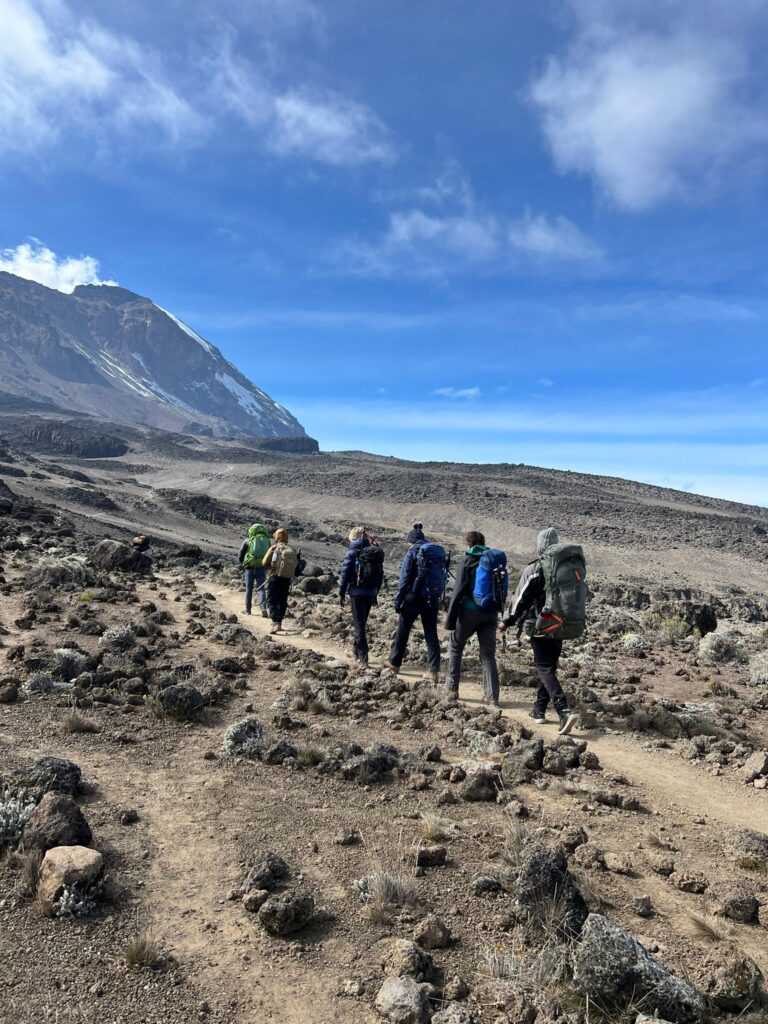
What is the best time to climb Kilimanjaro and Everest?
The best time to climb Mount Kilimanjaro is during its dry timeframes from January through early March and from June through October. These months with little rain give stable weather and clear skies, providing the highest chances of reaching the top. The best months are January, June, July, October, September, and August. However, weather is unpredictable because of microclimates, and rain happens even in the dry season. The long rainy season from mid-March through May, with April as the wettest month, brings slippery trails, daily rain, and poor visibility, so climbing during the rainy season is discouraged. Snow happens above 3.1 miles (5 kilometers), and nighttime cold on the summit night is below freezing.
The best time to climb Everest is a short window in May. The Everest Base Camp hike has seasons from March to May and from September to November, but the summit is inaccessible outside a short time in May. This spring climbing period lasts 23 weeks, when the jet stream lifts and clear conditions allow reaching the top. An autumn window exists, but late summer and early fall are rarely used because the monsoon from June through August makes trekking and climbing unsuitable. Weather is unpredictable, and outside May, winds go over 175 miles per hour (282 kilometers per hour).

Can you climb Mount Kilimanjaro and Everest year-round?
You can climb Mount Kilimanjaro year-round but not Everest. The optimal periods for Kilimanjaro are January to early March and June to October because of dry seasons. Best conditions fall outside mid-March through May and November, which is when rainy seasons cover the mountain. Due to its lower latitude and lower elevation, Kilimanjaro is viable during the rainy season as well. Steady weather allows access throughout the year, and guiding services run continuously.
Mount Everest does not have year-round climbing. Climbing to the top has a narrow window in April and May, and a secondary window in September and October. That is when the strong high-altitude wind lifts, because strong winds from the west rise during specific weeks. A climber attempting Everest outside these windows faces extreme winds and lethal conditions in the extremely dangerous high-altitude area. Mount Everest has a peak at nearly 9 kilometers (5.6 miles), and the usable window each year is a few weeks. Everest is unclimbable during the rainy season June through August because of heavy precipitation and risk of snow slides. The period November through March brings extremely low temperatures and violent winds. That is why May is the best period for climbing Everest.
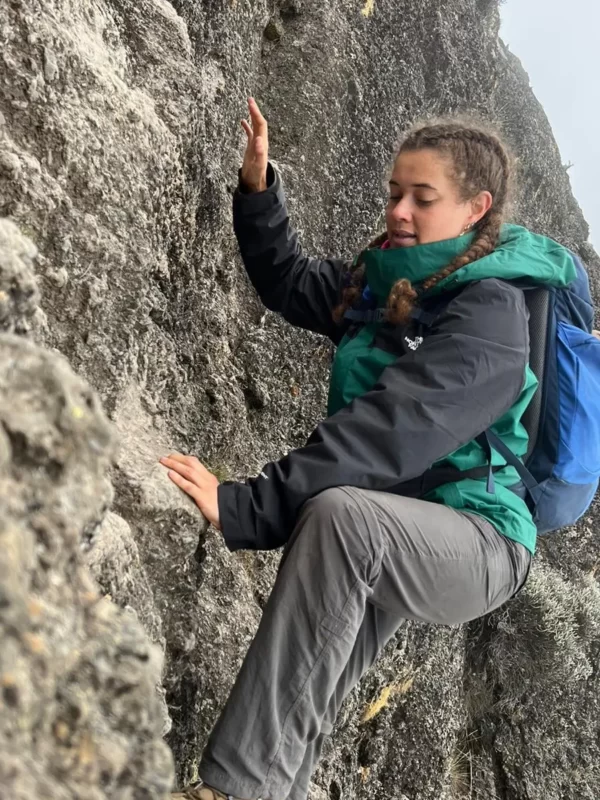
What are the accommodation options on Mount Kilimanjaro and Mount Everest?
Mount Kilimanjaro has camping and huts. Mount Kilimanjaro porters carry equipment, set up tents, and make meals. The Marangu path has huts with bunk-style sleeping and shared facilities. Mount Kilimanjaro does not have hotels on the mountain, and it does not have rest stops.
Mount Everest has places to stay, like a cluster of tents. Mount Everest lodges have showers, rooms, and restaurants with eating spaces. The starting camp has tents, and the climb to the top has personal tents. Mount Everest does not have camping or hotels on the trek. Camp 1 is at over 6 kilometers (3.73 miles) high, Camp 2 is at 6,400 meters (20,997 feet) high, Camp 3 is at 7,162 meters (23,497 feet), and Camp 4 is at approximately 7.9 kilometers (4.91 miles).

Which climb has better views: Mount Everest or Kilimanjaro?
Both mountains offer differing views. Mount Kilimanjaro has rapid ecological diversity and sights like giant thick-stemmed daisies and giant groundsel forests. You see plant belts from farmed land through heath and moorland to high-altitude barren land and frozen glaciers. Stella Point shows the mountain’s edge and a hole of dust. Kilimanjaro shows a sunrise from Freedom Summit over African plains and a panoramic view of the Great Rift Valley. Visibility is best from January to March and June to October. You can see Mawenzi Mountain and the Rebmann ice field. In the jungle area, you will see elephants, monkeys with black-and-white fur, and monkeys with long white tails.
Mount Everest has high-altitude panoramas that cover the Khumbu glacier cascade and 8000-meter peaks. The highest viewpoint on Earth surrounds Lhotse, Nuptse, and Makalu, and you see the south face of Everest. Kala Patthar reveals Everest, and Gokyo Ri displays four mountain tops at 8 kilometers (5 miles). The Base Camp hike goes through pine woods, bridges that sway, and glacial moraine, where you view yaks and colorful Tibetan banners. Mount Everest shows the curvature of Earth, sharp ice formations, and turquoise glacial lakes. Visibility is best from March to May and September to November, due to clearer conditions in spring and autumn. If you like ecological zones and an equatorial snow sight, then Kilimanjaro offers better views. If you prefer Himalayan panoramas, then Mount Everest is the better choice.

What is the cost of tours for Mount Kilimanjaro and Everest?
Mount Kilimanjaro costs $3000 to $6000 for a standard climb. Everest base camp hike costs $2500 to $5000 and Everest summit costs $30000 to $150000 or more. Because Mount Kilimanjaro is a hiking mountain, its total cost is $3000-$6000. Everest’s summit requires technical mountaineering, which is why the cost goes to $30000-$150000.
Mount Kilimanjaro packages cover entry costs, guides, tents, food, and porters. Everest expeditions cover permits and local guide assistance, but excludes personal equipment. Mount Kilimanjaro’s cost per day is $200-$400, whereas Everest expeditions have higher daily rates. Mount Kilimanjaro’s entry charges are less than Everest’s costs, so Mount Kilimanjaro has cheaper deals. Everest permits cost $11000 to $15000, and it has environmental fees and icefall path costs. Mount Kilimanjaro’s gear costs $500-$1500 whereas Everest’s equipment costs $5000-$10000.


Got questions about this post?
Get free tips from John to help jumpstart your Kilimanjaro journey! Whether securing a travel visa or finding your ideal tourist destination to navigating through a list full of travel insurance policies, John will help you figure out the local tourism industry.
Chat with John




 Canadian
 American
 British
 Zimbabwean
 Swedish
 Hungarian
 German
 Singaporean
 Australian
 Chilean
 Hong Konger
 Bulgarian
 Croatian
 Syrian
 Luxembourgish
 Romanian
 Wallisian
 Dutch
Dutch