
Climbing Kilimanjaro without a guide is illegal. A licensed guide must accompany all climbers, and solo climbing requires a guide as well. Standard Kilimanjaro climbing requires a team of guides and a team of porters. Kilimanjaro is a non-technical climb. The climb does not require ropes, harnesses, or carabiners.


Do you need a guide to hike Mount Kilimanjaro?
Yes, you need a guide to hike Mount Kilimanjaro. The guide must be licensed. Unguided ascents are not allowed because of the Tanzanian government rules for safety, permit, and navigation. Beginners must follow the rule, and getting permits is impossible without a licensed guide.
Every expedition needs a licensed travel company, and every hiker needs a tour guide. A guide guarantees correct way finding on the path. Leadership has helper guides, cooks, and porters. Navigation uses experienced guides who know terrain and weather patterns. Climbing with a guide has logistical support: climbers carry between 15 and 20 pounds (6.8 and 9.1 kilograms), while porters handle heavier loads.

Guides handle altitude sickness risks. High altitude illness causes ten fatalities per year, and altitude sickness causes a thousand evacuations annually. Summit chance of success with experienced guide services is 95-96%, which is why groups have multiple guides for safety during the climb to the top.
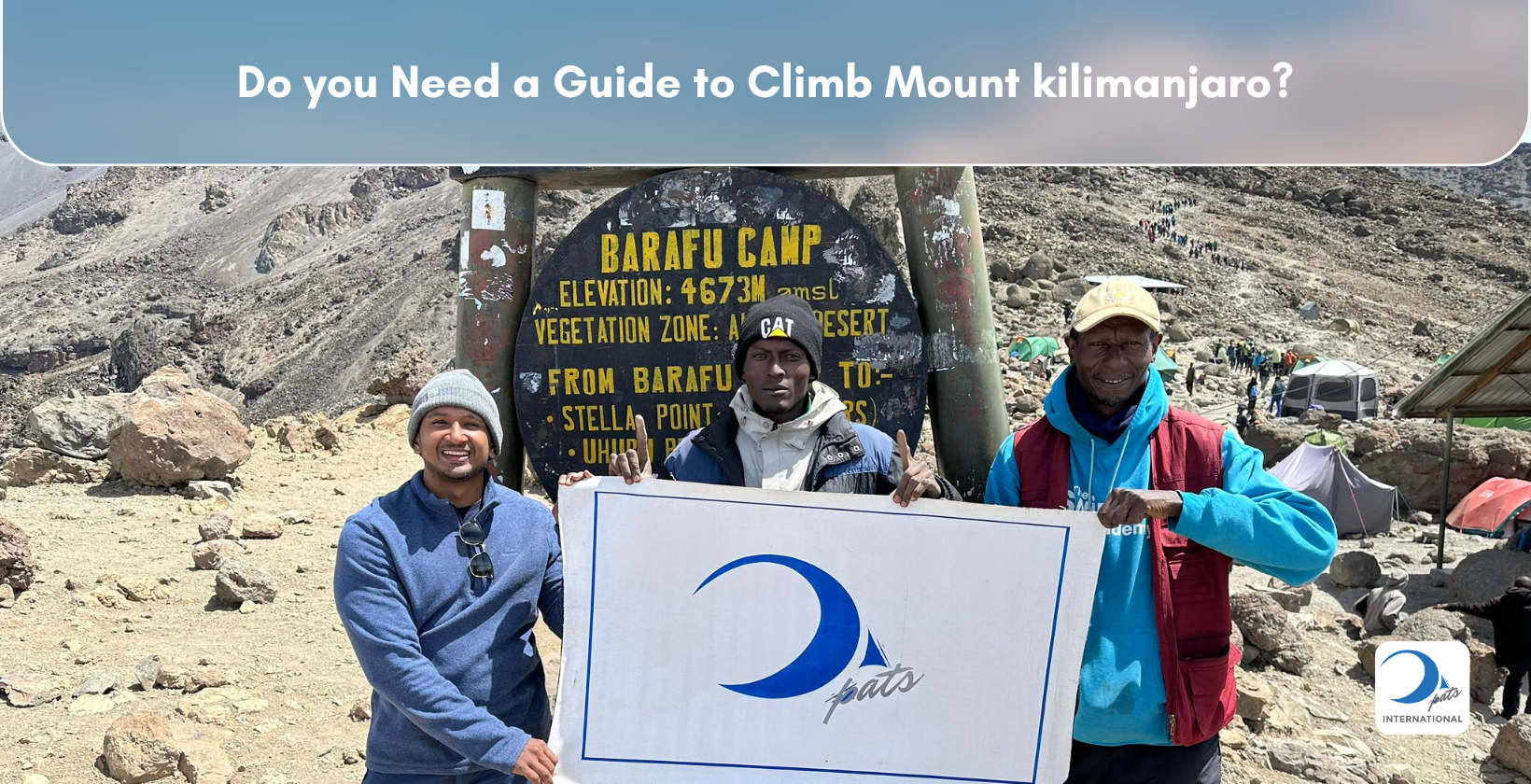
During my climb I was accompanied by my guide Emmanuel. Emmanuel saw signs of my high-altitude illness. He made me slow down at times. On the final climb at night, he guided our group through darkness and sudden weather shifts. He shared cultural stories, increasing my understanding how important the mountains were to the Chagga people. The legal obligation became valued. His knowledge and skill made sure I reached Freedom Summit safely and returned home.
Can you climb Mount Kilimanjaro solo?
No, you cannot climb Mount Kilimanjaro solo. Solo climbing is banned. Self-guided and unsupported expeditions are not allowed. Tanzanian law requires guides for climbers. Since 1991, guides have become mandatory. Climbers without a guide are turned away at the entrance to the park.
Solo travelers can book private treks. A private trek needs a guide and a guide team. You trek on your own, without group dynamics. You can walk alone during portions of the hiking day but within a supervised structure. The mandatory guide rule improves safety. On summit night, the climb during the night starts around 11 PM.
The regulation of a guide is for safety. Roughly 10 fatalities happen per year due to high altitude sickness. Guides check symptoms of elevation sickness, adjust the speed for acclimatization, and carry oxygen for emergencies. So, a pure solo, self-guided, or unsupported hike is not allowed.
Can you hike Mount Kilimanjaro without a porter?
Yes, you can hike Mount Kilimanjaro without a porter but it is hard. The physical burden affects the chance of reaching the top. Without porters, a climber carries their own gear which kitchen gear, food, personal belongings, and tents. The equipment weight adds to the pack during the trek. This is the porter lightweight method, which means carrying 14.97 kilograms (33 pounds) personally.
Porter assist is standard practice, and most trekkers use porters. Due to porter support, climbing the peak becomes possible for climbers. Porters carry at most 44.09 pounds per person, and there are three to six porters per trekker. They set up camp, make meals, and fetch water. This allows trekkers to ascend with a daypack. KRTO watches porter regulations and has standards for fair treatment. Inexpensive treks under $1500 reduce the number of porters per hiker, which is unsustainable. Midrange climbs at $2500 to $4000 keep standard porter support.
I thought about minimizing costs and reducing porters. However, park rules and practical realities altered my view. Via the Machame path, I saw porters change the trek into something achievable, carrying tents, kitchen tools, and water through demanding terrain. At High Camp, porters built shelters with efficiency and made meals.
What are the rules for climbing Mount Kilimanjaro?
The rules for climbing Mount Kilimanjaro include that independent climbing is banned. Climbing Mount Kilimanjaro needs a licensed guide and a licensed guiding company. Tanzania National Parks Authority makes sure rules are followed, and mandatory guides are a legal requirement.
Climbing Kilimanjaro requires a permit. Permits need a licensed operator, and permit fees change by route and duration. Entrance charges cost from 600-800$. Fees covers national entry fee, fees for protecting the area, cost of staying overnight, emergency help costs, and charges for staying in the cabin. Access demands registration at entrance stations and sign in at camps, and policy needs climbers to sign in at each camp.
The maximum number of people per group is fifteen individuals. Minimum age is ten years old, and younger climbers get special permission. There is no maximum age restriction. Climbing needs cardiovascular endurance, sturdy shoes, warm clothing, sleeping bags, physical fitness, and leg endurance, but does not need technical climbing know-how. Climbing requires daily hiking for five to nine days period and each climbing day length is around 15 hours. The suggested plan is one week long. Shorter itineraries raise danger of high altitude sickness and lower chances of reaching the top. Daily height increase cap is 1,640 feet (500 meters) above about 3.2 miles (5.1 kilometers) elevation. Regulations advise hydration of about 3 quarts to five liters daily. Drinking alcohol, caffeine, and stimulants is limited. Mental preparation and physical readiness are vital. Uncontrolled hypertension, recent major surgery, severe lung condition, and serious heart problems warn against climbing.
There is a no-impact rule. Climbers must take out trash and waste, and deviation from marked paths is limited. Climbers must keep distance from wildlife and avoid giving food to wildlife. Wild camping, campfires, and open fires are banned so cooking needs portable burners. Sound volumes are limited at campsites, and exploring caves is limited. Marangu path uses hut camping only, and other routes have authorized camping spots. Guards watch for compliance, and violations lead to penalties and denial of access. Management manages tourism with environmental protection and balances tourism with keeping climbers safe. Regulations guarantee fair handling of baggage workers and porter pay.
Guides must be licensed, and one guide for every two climbers is required. Guides watch acute altitude sickness signs and guarantee immediate descent. Policy allows early descent with assistance. Guiding groups have oxygen for urgent medical needs, and leaders have medical instruction. Management organizes rescue services, and rescue charges are mandatory. The fee for the permit includes a rescue charge. Insurance must cover climbing in high mountains, getting you out in a crisis, and airlift. Climbing costs range 1500-3500$ and includes permits, guiding assistance, food, accommodation, and porters.


